
Copy Nothing, Lose Everything, Begin Again
The Furure Of Jaguar
Editorial
Wasting Time with Nara Smith
Culture & Lifestyle

ICONYC Magazine
Wasting Time with Nara Smith
Culture & Lifestyle
The Most Expensive Thing She Makes Is Nothing
Nara Smith does not sell food. She sells time. Specifically, the performance of having more of it than you could ever afford to waste — and the paradox at the heart of that performance is the most revealing cultural document the internet has produced in years.
C
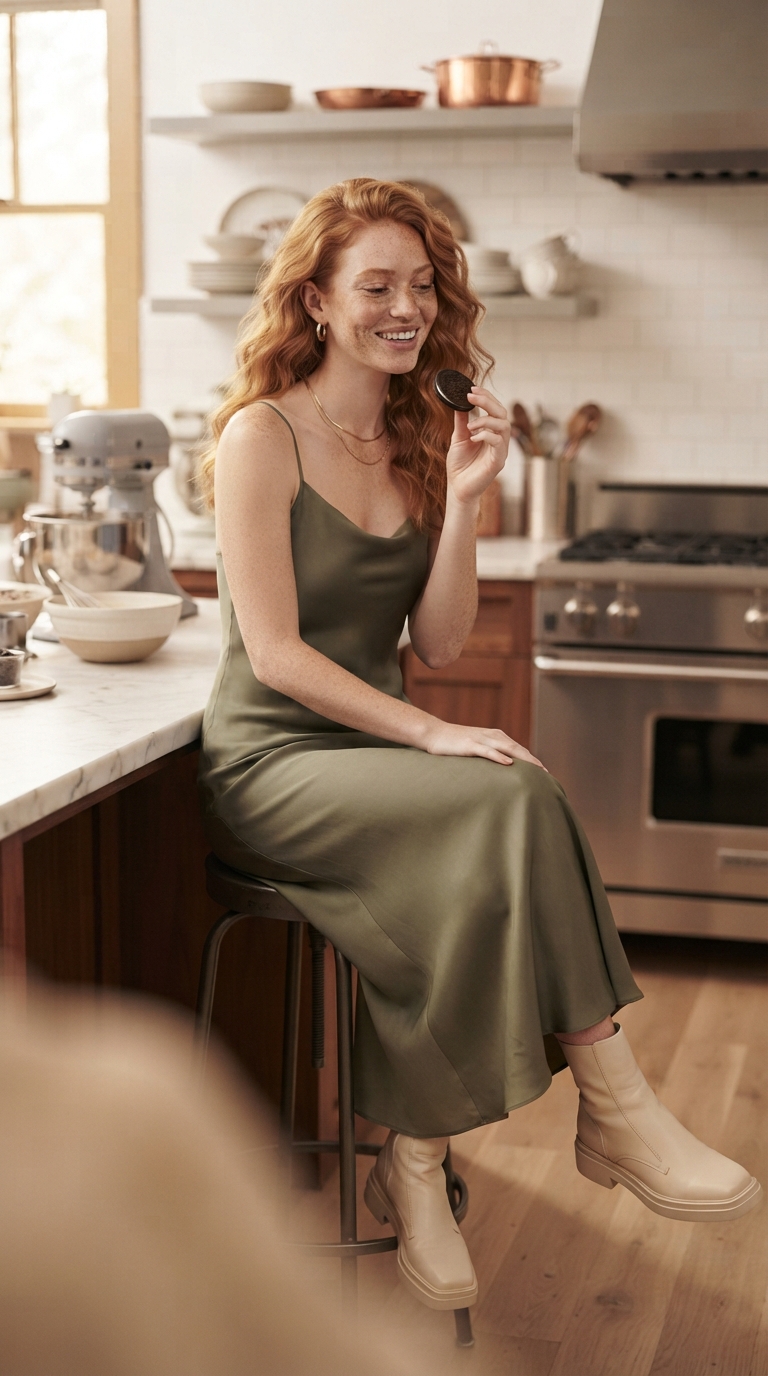
Consider the Oreo. It costs approximately four dollars for a standard package at any grocery store in the United States. It has been manufactured to the same specification since 1912. It is, in every material sense, a solved problem: a unit of mass-produced pleasure requiring no effort, no skill, and approximately ninety seconds to acquire. The case for making one from scratch — milling the cocoa, measuring the lard, piping the filling by hand, cooling the assembled cookie, tasting the result and finding it probably slightly inferior to the factory version — is, on its face, nonexistent.
Nara Smith made them from scratch, in a ballgown, in a kitchen that looked like it had been designed by a production team, narrating the process in a soft voice while soft piano played, and the video was watched millions of times.
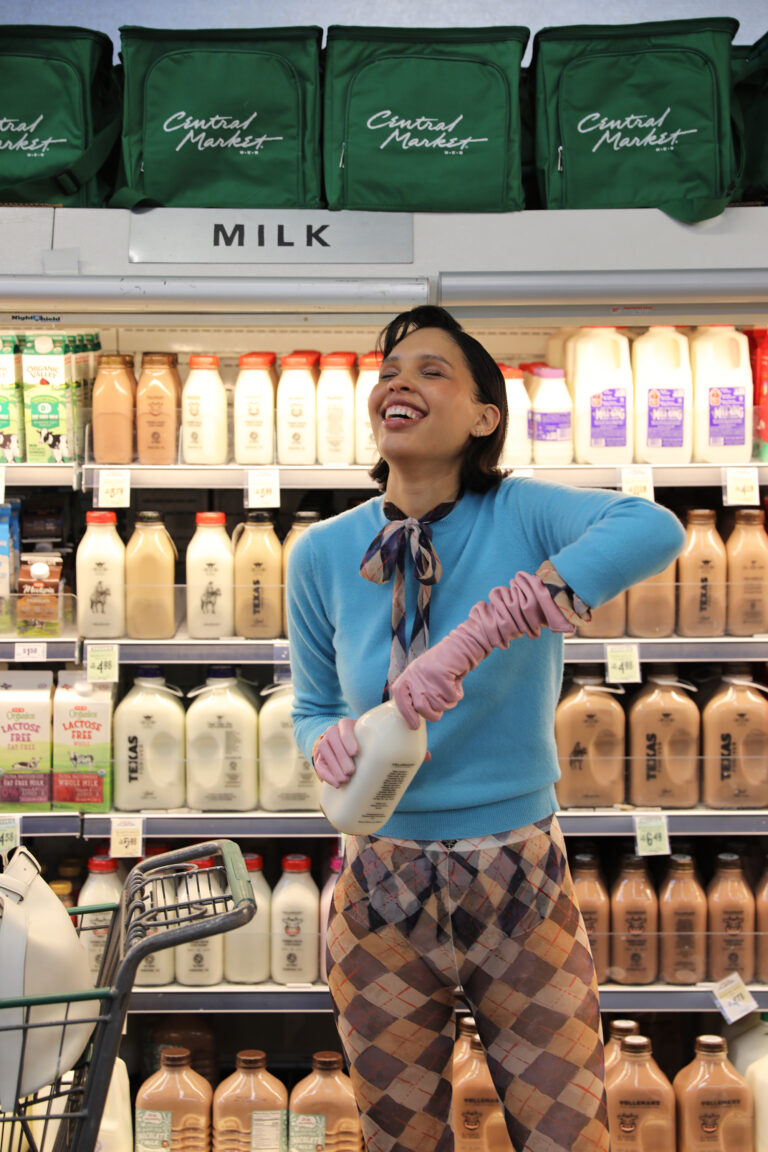
She has also made gum from scratch. Cereal. Peanut butter and jelly sandwiches, sourced from raw peanuts, hand-picked berries, and bread she had baked herself. Pop-Tarts. Cheez-Its. Boba. Each of these products exists in a packaged form available for under five dollars at any supermarket. Each of them, in Nara Smith's hands, becomes a project requiring hours of sustained attention, specialised technique, and the kind of kitchen that most of her more than twelve million followers will never stand in. Several of them rank among the most-watched videos she has ever posted.
The question worth asking is not why she makes these things. The question worth asking is what, exactly, her audience is watching when they watch her make them, because the answer is not cooking, and understanding what it actually is illuminates something fundamental about the moment we are in and the anxieties it has produced.
Veblen's Ghost
In 1899, the Norwegian-American economist Thorstein Veblen published a book that remains, 125 years later, one of the most precise descriptions of what wealthy societies do with their wealth. The Theory of the Leisure Class introduced two concepts that have never been superseded as analytical tools: conspicuous consumption, the display of status through the visible acquisition of goods, and conspicuous leisure, the display of status through the visible non-use of productive time.
Veblen's insight was that waste is not the unfortunate byproduct of wealth but its primary signal. A reliable signal of status must, by definition, be difficult to fake, which means it must require either money or time that the non-wealthy cannot spare. Conspicuous consumption requires money: the carriage, the livery, the dining room with twelve settings. Conspicuous leisure requires time: the mastery of etiquette achievable only through years of unhurried practice, the proficiency at sports that only the unoccupied can develop, the housewife who devotes six hours to the aesthetic arrangement of a meal that a servant could have prepared in one.
Veblen was particularly interested in what he called vicarious leisure: the way wealthy households signal status not only through their own non-productivity but through the non-productivity of those around them. A wife who spends her days in elaborate domestic performance, producing nothing economically while consuming enormous quantities of time on tasks that could be accomplished more efficiently, is performing status on behalf of the household she belongs to. Her time is the signal. The elaborate meal she has spent a day preparing says: we are people for whom time is not the scarce thing. We have enough of it to waste magnificently.
The concept has not aged. It has simply migrated platforms.
The Time Signal
Nara Smith was born in Bloemfontein, South Africa, in 2001, the eldest child of a Mosotho mother and a German father. She grew up in Frankfurt, became a model at fourteen, and moved to Los Angeles at eighteen with an IMG contract and no prior visit to the country. At a fashion event in Milan in 2019, she met Lucky Blue Smith, a Utah-born model whose family is Mormon, whose angular bone structure made him briefly one of the most photographed faces in fashion in the mid-2010s, and whose Instagram caption game has never quite matched his cheekbones. They married in early 2020. She was eighteen. He was twenty-one. They now have four children, the youngest still an infant, the oldest not yet five.
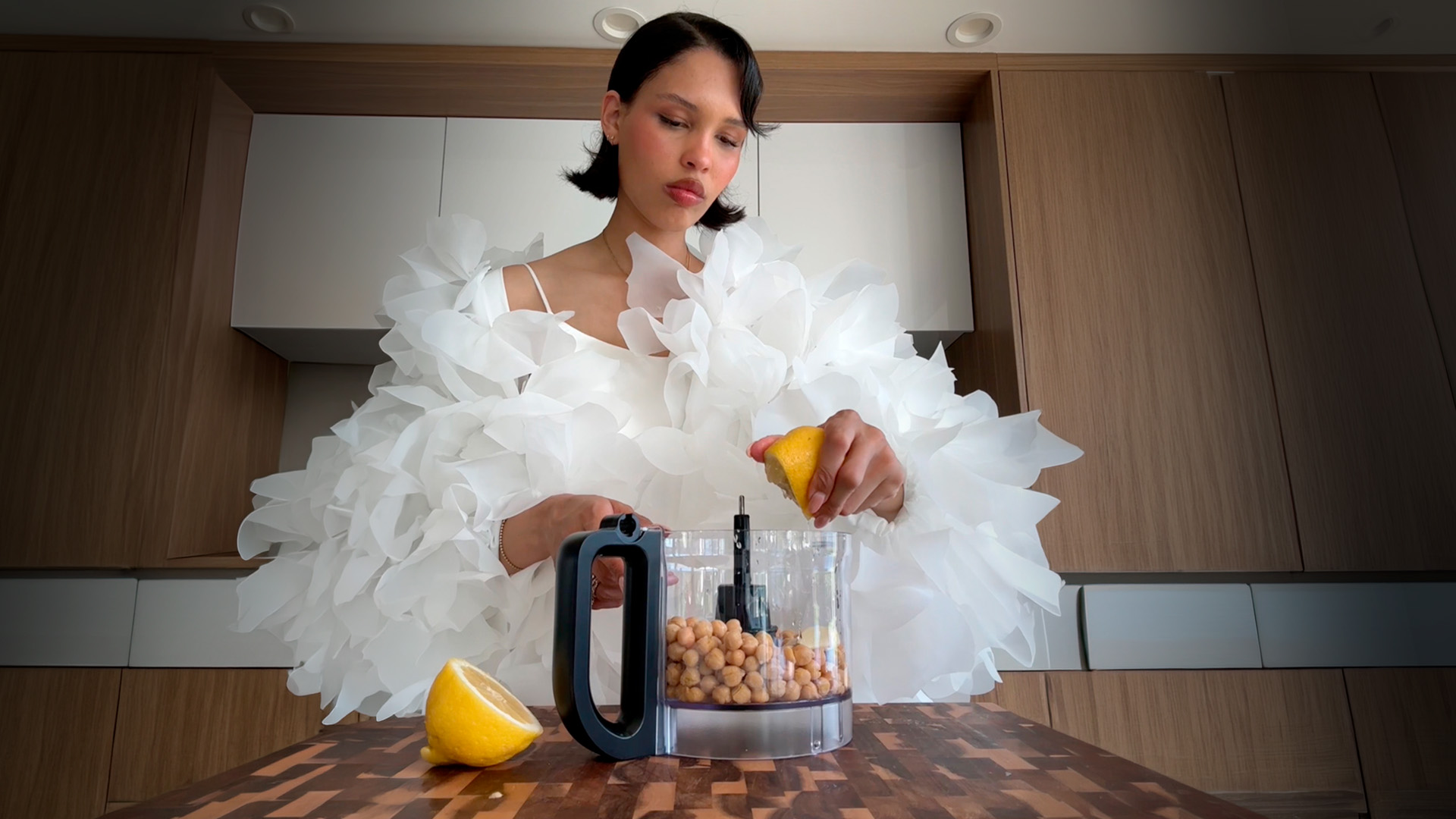
By late 2023, Nara had begun uploading cooking videos to TikTok. The format was immediately and precisely itself: she arrives in the kitchen wearing something a reasonable person would reserve for a black-tie event, she explains in a quiet, accented voice what she is about to make, and she makes it entirely from raw ingredients while family life carries on at the edges of the frame and the piano continues its gentle business in the background. The kitchen is large and pristine. The light is perfect. Nothing is ever spilled on the dress. The result is always presented to Lucky Blue, whose role in the videos is to receive the thing she has made with the specific quality of grateful adoration that reads as both sincere and slightly performative, which is to say it reads exactly like a marriage.
The first videos found audiences in the tens of thousands. Then the from-scratch conceit escalated. A peanut butter and jelly sandwich made from raw peanuts, fresh-picked berries, and hand-baked bread became her first true breakout, watched millions of times. The Oreo video followed. Then the cereal. Then the gum. The escalation is the product: each new video asks, implicitly, how far into the logic of from-scratch production we are willing to follow her, and the answer the audience keeps giving is: further.
What the audience is watching is not the food. Nobody is taking notes on how to mill their own cocoa for the specific purpose of home-manufacturing chocolate sandwich cookies. What they are watching is the time. The staggering, almost theatrical quantity of time required to produce, by hand, something that industrial civilisation has been mass-producing efficiently for over a century. The time is the message. The time is the luxury. The time is what more than twelve million people are there to witness being spent.
This is Veblen's vicarious leisure, updated for a platform built on thirty-second videos and watched primarily by people whose own relationship with time is one of its most acute sources of anxiety.
The Scarcest Resource
The people who watch Nara Smith are, in the broadest demographic terms, young women. Gen Z and millennials, largely. They are, as a cohort, among the most economically pressured generations in recent American history: carrying more student debt, facing higher housing costs relative to income, entering a labour market that has become progressively more demanding and less stable than the one their parents navigated. They are time-poor in ways that are not incidental but structural. The expectation that they will be professionally productive, personally presentable, socially engaged, physically maintained, and relationally available simultaneously is not an individual failure to manage time; it is a cultural demand that exceeds the available hours.
Into this context arrives a woman who appears to have nothing but time. Not leisure time, exactly — she is clearly working, the kitchen is clearly a workplace, the videos are clearly a commercial enterprise — but time of a specific quality: time that is not owed to anyone, that does not have a deliverable attached to it, that can be spent on the extraordinarily inefficient production of a mass-market cookie without any economic justification whatsoever. The time she is performing is the time of someone for whom economic necessity does not dictate the structure of the day.
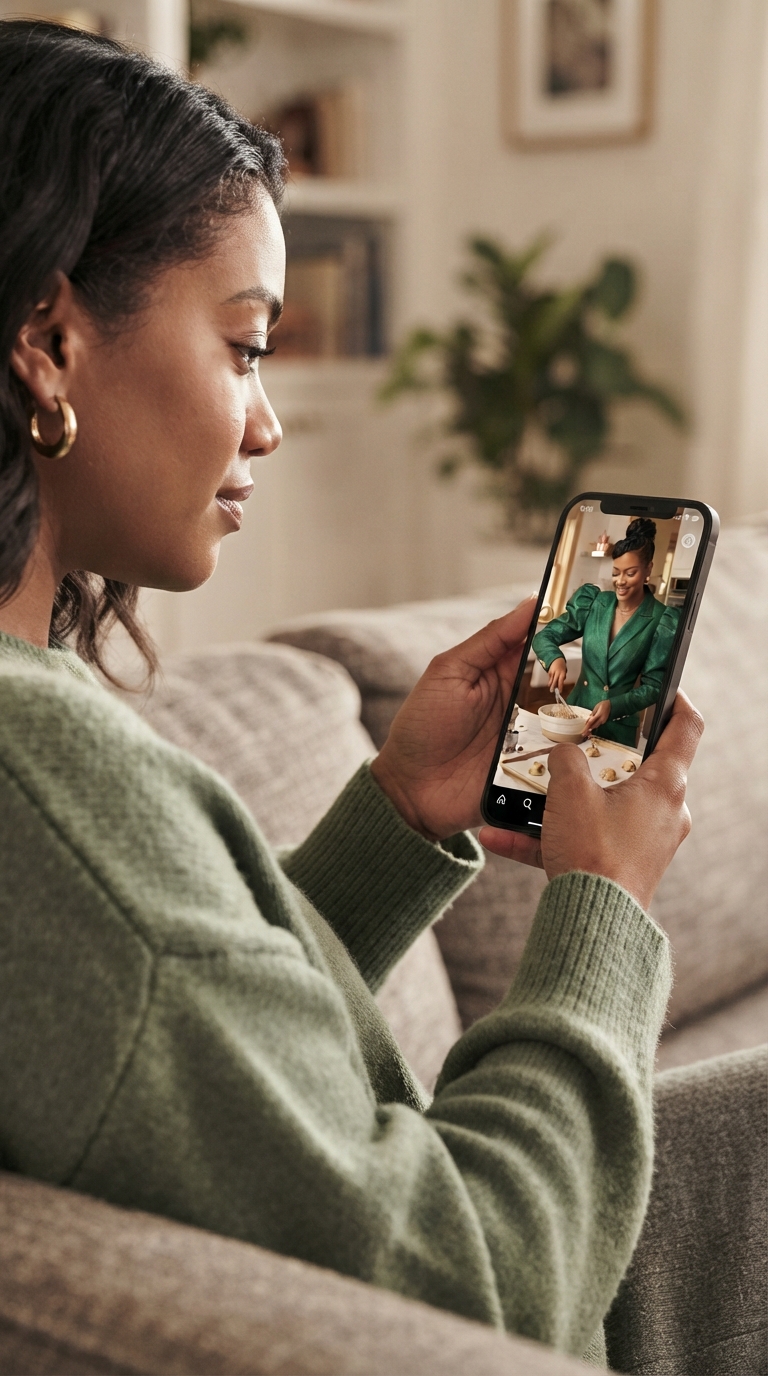
This is the fantasy at the centre of the content, and it is important to be precise about what kind of fantasy it is, because it is not the fantasy of having her life. Very few of the people watching these videos seriously imagine themselves spending seven hours making homemade Cheez-Its. The fantasy is subtler and more interesting than direct aspiration. It is the fantasy of a world in which time could be spent this way: in which the day had no obligations pressing against its edges, in which a task could be undertaken purely for its own sake, in which the ratio of effort to result could be wildly, extravagantly inverted with no consequence. It is the fantasy of time without demand on it, which is among the rarest experiences available in contemporary life and among the ones most broadly desired.
Veblen argued that conspicuous waste, because it requires something genuinely scarce, produces a reliable status signal. Time is, in 2024, considerably scarcer than money for the majority of people who watch TikTok. Nara Smith's content is performing the possession of the scarcer commodity.
The Paradox Engine
The contradiction at the centre of her entire enterprise is this: the performance of having unlimited time is generating, for her, very serious income.
She is represented by CAA. She has worked with Miu Miu, Marc Jacobs, Fendi, Calvin Klein, and Aritzia, and People named her its Creator of the Year in 2024. Her debut cookbook, Homemade, was published by HarperCollins in October 2026, with a nine-city tour behind it. She is making her acting debut in Amazon MGM's thriller Tyrant. She is, by any measure, a professional content creator running a significant commercial operation, and the product she is selling is the appearance of someone who does not need to run a commercial operation.
This is not hypocrisy, or not only hypocrisy. It is something more structurally interesting: the monetisation of the performance of non-monetisation. The content only works because it appears to be produced by someone with no financial incentive to produce it, someone who makes homemade Oreos because she wants to, because she has the time, because the household operates in a register where such things are normal. The moment the commercial scaffolding becomes visible, the fantasy collapses. Which is why it stays, mostly, invisible.
The mechanism has a precedent. The great houses of the nineteenth century maintained elaborate standards of domestic performance whose primary function was to signal that they could afford not to be efficient. The twelve-course dinner was not more enjoyable than a four-course one; it was more expensive in labour and time, which was the point. The elaborate housewife Veblen described was not producing more value by spending six hours on a meal instead of one; she was displaying the household's freedom from the tyranny of productivity, which was the signal that counted. What has changed, in Nara Smith's version, is that the display itself has become the commercial product. The show of not needing money is making her a great deal of it.
This is a genuinely novel economic structure. Veblen's leisure class performed waste for an audience of social peers, and the return was status within that class. Nara Smith performs waste for an audience of more than twelve million people who are not her social peers and receives, in return, direct monetary compensation from the platforms, brands, and publishers that want access to those twelve million people. The signal has become the mechanism. The waste is the work.
@naraazizasmith | Instagram
The Dress That Does Not Get Dirty
There is a secondary performance running beneath the time performance, and it is the one that generates the most online commentary: the dress.
In practically every video, Nara Smith cooks in clothing that cannot survive cooking. Ballgowns. Silk blouses. Cocktail dresses in pale colours. High heels. The most elaborate formal hairstyling. The implicit message of this choice is not simply that she is glamorous. It is that the cooking does not threaten the dress. That she moves through the kitchen in a space of such completeness and composure that the usual terms of contact between elegant clothing and food preparation simply do not apply to her. Nothing boils over. Nothing spatters. The flour does not land where flour lands.
Veblen would have recognised this immediately. In his analysis of dress, he identified expensive, delicate, inconvenient clothing as among the most reliable signals of status, specifically because such clothing announces that the wearer does not perform manual labour. A garment that would be ruined by work signals, through its survival, that no work is being done. Nara Smith has updated this argument for a generation that knows she is, technically, working, by making the dress's survival a performance of its own: not simply proof of idleness but proof of a relationship with domestic space so serene, so controlled, so entirely on her own terms, that the normal violence of cooking cannot reach her.
The viewers who comment, with varying degrees of credulity, that she manages to cook without getting anything on her dress are identifying the signal correctly, even if they cannot name it. The dress that does not get dirty is telling them something about the life that contains it. Whether it is telling them the truth is a separate question.
The Race That Is Never Mentioned
Any serious engagement with Nara Smith as a cultural phenomenon requires sitting with a dimension of the content that the discourse around her almost entirely fails to address with precision: she is a Black South African woman performing an aesthetic that has, in its dominant cultural form, been almost exclusively white.
The tradwife genre from which her content is distinguished but not entirely separated has a racial grammar. Its most recognisable figures are white, rural or at minimum suburban, Christian in a specifically American Protestant way, and performing a domestic ideal whose historical referent is the mid-century American housewife — a figure whose cultural prestige was constructed in explicit opposition to, and at the direct expense of, Black domestic workers who performed the actual labour those arrangements required. The pastoral kitchen, the from-scratch ethos, the gentle self-sufficiency, the decorative femininity: these are not neutral aesthetics. They carry a history.
Nara Smith's occupation of this aesthetic is consequently legible in multiple, contradictory ways simultaneously. She has been read as disrupting it: her presence as a young Black woman in a visual language coded as white creates a friction that exposes the constructedness of the original. She has been read as reinforcing it: by performing the aesthetic successfully, she legitimises and extends it, making it available to a broader demographic while leaving its ideological freight intact.
She has been read as transcending the entire argument: her content is not political, she does not make claims about gender roles, she cooks because she wants to cook and dresses elaborately because she wants to dress elaborately, and the attempt to conscript her into ideological arguments she has not made is itself a form of bad faith.
All three readings have something to them, and the discomfort of holding all three at once without resolving them into a verdict is the appropriate analytical position. What can be said without qualification is that the aesthetic she has built is one whose pleasures and whose tensions are inseparable from the bodies and histories that have previously inhabited and been excluded from it. The performance of conspicuous leisure is not performed in a social vacuum. It is performed in a specific cultural context, and the context is part of the performance whether or not the performer intends it.
What the Audience Is Actually Buying
The critical discourse on Nara Smith has spent most of its energy on the question of what she is promoting, which is the wrong question. She is promoting, in the most direct possible sense, a feeling. The more interesting question is what feeling, and why twelve million people need it badly enough to return to her content week after week.
The feeling is not aspiration, or not straightforwardly. It is something closer to the experience of watching a system that is not yours operate without friction. The specific pleasure of her videos is the pleasure of a world in which the relationship between effort and result has been uncoupled from economic logic: where an enormous amount of effort is expended on a trivially small result not because it is necessary but because the expenditure itself is the point. This is, at its root, a utopian feeling. It describes a world in which the pressure that structures most people's relationship with time — the pressure of having to account for it, justify it, render it productive — simply does not apply.
The audience is not watching a woman cook. They are watching time being spent freely, which is what they cannot do themselves, and finding in the spectacle of that freedom something that functions like rest. Parasocial comfort with an unreachable life is not a new phenomenon in media — it is the basic mechanism of celebrity culture, which has always sold the fantasy of a life unconstrained by the scarcity that constrains its audience. What Nara Smith has added is the specificity of the from-scratch conceit: the time is not being spent on shopping, travel, or obvious luxury. It is being spent on making the most ordinary things imaginable by the most inefficient method available. The luxury is located precisely where luxury is most unexpected: inside the production of the commonplace.
A grilled cheese sandwich, made from cheese produced from curds and whey, on bread baked that morning, served to a beautiful husband who receives it with the grateful attention of someone who has never been presented with a grilled cheese sandwich under any other circumstances, watched by twelve million people who will eat their own grilled cheese sandwiches from the packet, in the kitchen, in whatever they happened to be wearing.
The cheese is not the point. The time it took to make the cheese is the point. And the point of the time is to show that time, here, is not the problem; it is everywhere else.
@naraazizasmith | Instagram
The Contradiction, Held
What Nara Smith has built is an enterprise whose commercial success depends on the convincing performance of commercial disinterest. This is not new in content creation, where authenticity has always been the primary product and the primary performance simultaneously. What is new is the specific mechanism: the signal she is sending, conspicuous waste of time, is the oldest available status signal, identified by Veblen in 1899 as the primitive form of leisure class display, now running at scale on a platform whose entire infrastructure is built on the monetisation of attention.
The woman in the ballgown making the cereal from scratch is not, in Veblen's terms, wasting time. She is working, very efficiently, at producing the performance of wasted time for an audience that will pay for the sight of it with their own time and attention, which will then be sold to brands and platforms who understand what that attention is worth. The waste is the product. The leisure is the labour. The house that looks like it requires nothing is sustaining itself on the income generated by the appearance of needing nothing.
This is not a critique of Nara Smith. She has built something coherent and commercially sophisticated and, in its own terms, genuinely artful: a world so visually complete and tonally consistent that it functions as a form of total aesthetic environment, as controlled in its way as a designed object, as intentional as a collection. The contradictions embedded in it are not failures of the enterprise. They are the engine of the enterprise. The content is interesting precisely because it is impossible: a life that could not exist in the terms in which it presents itself, performing its impossibility as its primary attraction, and making very serious money from the audience that watches it know it cannot have what it is watching.
Veblen could not have predicted TikTok. But he described it in 1899.
The theory of the leisure class is alive. It is wearing a ballgown. It is making a sandwich that will take six hours and cost forty dollars to produce from scratch.
The Oreo, for reference, costs four dollars at the grocery store.
She has more than twelve million followers.

Your cart is empty