
Wasting Time with Nara Smith
The Most Expensive Thing She Makes Is Nothing
Editorial
Travel
Say Yes to Reefs in Egypt
Editorial
Travel
Say Yes to Reefs in Egypt
The diver who said no to nine hundred hotel rooms and built Egypt’s most radical reef community instead.
Author: Kaila Yu
M
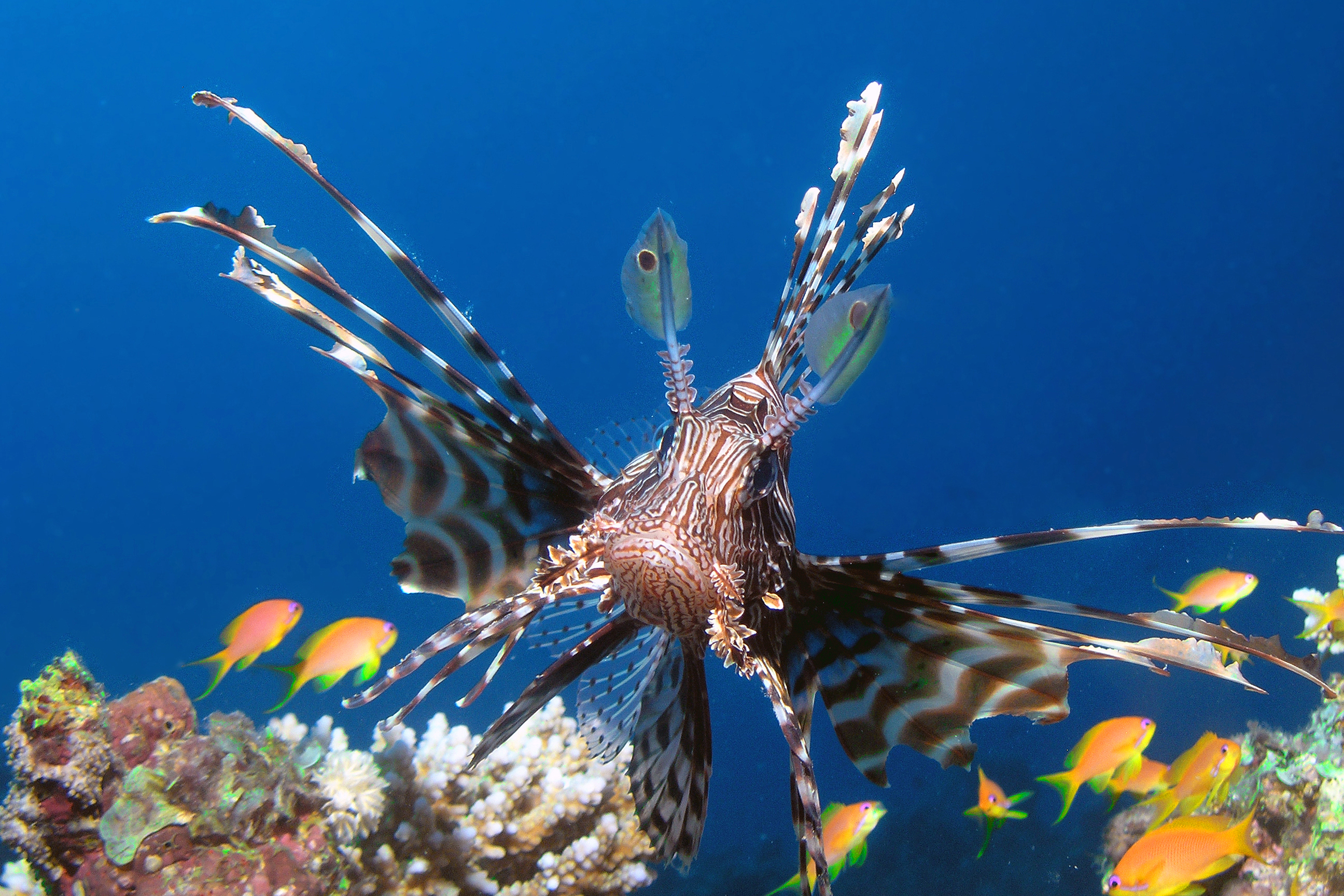
Mornings at Marsa Shagra unfold like meditation. The rising sun washes the desert in gold, casting a glow over sand-colored domes and canvas tents that seem to rise, otherworldly, from the earth, more like a scene from Dune than a seaside village. Turn your gaze seaward, though, and the desert meets calm turquoise waters, where the first divers dip quietly beneath the surface of the Red Sea.
Most divers have no idea this beloved eco-diving village began with a refusal. Hossam Helmy founded the family-run Red Sea Diving Safaris nearly thirty years ago after more than a decade of living in a tent and exploring Egypt’s formerly militarized southern coastline. When the Egyptian Tourism Development Agency told him he would need to build nine hundred hotel rooms or face monetary penalties, he refused. Instead, he created a low-impact diving community featuring stunning solar-powered beach tents, desert-farmed food, and a team composed of Bedouin and local anglers.
“Instead of mass tourism,” recalls his son, Mohamed Hossam Helmy, “we want to stick to our concept of preserving the reefs for future generations.”
.jpeg)
In the 1980s, foreigners were prohibited from camping beyond Hurghada on Egypt’s southern Red Sea coast. Few Egyptians paid any attention to the reefs, but Hossam Helmy wanted to dive in the area, being drawn by the untouched coral ecosystems.
His solution was radical: a movable camp in Marsa Alam. “We would go for three days, take down the tents, and move to the next reef,” Mohamed recalls. “There was no electricity, only candles. The tents were so small you could not even stand in them. You only went inside to sleep.”
It was during these expeditions that Helmy began mapping the region’s reefs with mentor Karen Van Obstel, diving and documenting dive sites such as Marsa, Sharma, Halq, and Ras, each with its unique structure and marine life.
Red Sea Diving Safaris eventually evolved from a cluster of tents into three eco-resorts on the Red Sea—Marsa Shagra, Marsa Nakari, and Wadi Lehem, recognized globally as PADI Eco Centers from the Professional Association of Diving Instructors in partnership with the UN and Reef-World Foundation. From fighting to establish Egypt’s first marine protected areas, to mentoring the next generation of local divers, Helmy’s story is a rare example of community-first tourism in a region better known for mega resorts.
Helmy built not a resort, but an ethos: fragile coral could not survive mass tourism. “If you want all-inclusive five-star hotels, of course, there are Sharm El Sheik or Hurghada. But Marsa Alam is still very virgin, still pure… made for divers,” says Ahmed Sayed, PADI's Regional Manager for Egypt.
The decision to anchor at Marsa Shagra was strategic: it was the closest point to Elphinstone Reef, ranked one of the world’s best diving spots, reachable by speedboat in 15 minutes instead of 3 hours from the nearest port. Next, Marsa Nakari was chosen for its proximity to Dolphin House, where pods gather daily. Wadi Lahami became the southernmost lodge, serving as the gateway to twenty-eight offshore reefs.
Helmy’s model contrasts starkly with Egypt’s booming resort culture. “Each location has its style,” Sayed explains. “Sharm El Sheik for resorts, Dahab for backpackers. But in the south, you find diving camps with tents right on the beach. That is the beauty of it.”
When ordered to expand to nine hundred rooms, Helmy held firm. “Many resorts market to commercial guests who come once and never return. They bring all the plastic and the waste,” Mohamed says. “Eco-tourism like ours costs more, and we get fewer guests, but people return. It preserves the reef.”
Editorial
Travel
Say Yes to Reefs in Egypt
Helmy’s refusal became more than a business choice; it paved the way for conservation across the region. Additionally, he pushed for Marsa Nakari’s Sha’ab Samadai (Dolphin House) to become a protected sanctuary, eventually extending 100-plus kilometers.
The recognition by PADI and the Reef-World Foundation as one of the first eleven global Eco Centers cemented Red Sea Diving Safaris as a model for education-first tourism. To become a certified Eco Center, dive outfits must lobby for marine protected areas and adhere to strict guidelines for responsible diver conduct, staff training in conservation, and sustainable waste management. Guests are not just divers; they become ocean stewards and protectors.
“The environmental danger isn’t from the divers,” Ahmed notes. “Before training, someone might throw a plastic cup in the ocean without realizing the impact. After education, they protect the ocean. That is the change.”
“This is our home,” Mohamed emphasizes. “Out of 72 resorts in the south, hardly any of the owners live here. Those properties are managed from Cairo. But we live here. So, we take care to preserve the treasure of the Red Sea, which is the marine life.”
Egypt’s Red Sea coast faces relentless pressure from cruise ships and mega-resorts. Concrete and plastic have transformed Hurghada and Sharm el-Sheikh into cautionary tales of overdevelopment and overuse.
“Marsa Alam stands apart,” Ahmed says. “You don’t get big boats, shopping, nightlife. Between hotels, there can be twenty kilometers of desert, only sea and sun.”
But can it last? Development looms as investors eye cheap package tourism. Helmy’s model argues for an alternative approach: smaller, more expensive, but infinitely more sustainable. The question now is whether Egypt will prioritize living reefs over quick revenue, a choice with significant generational implications.
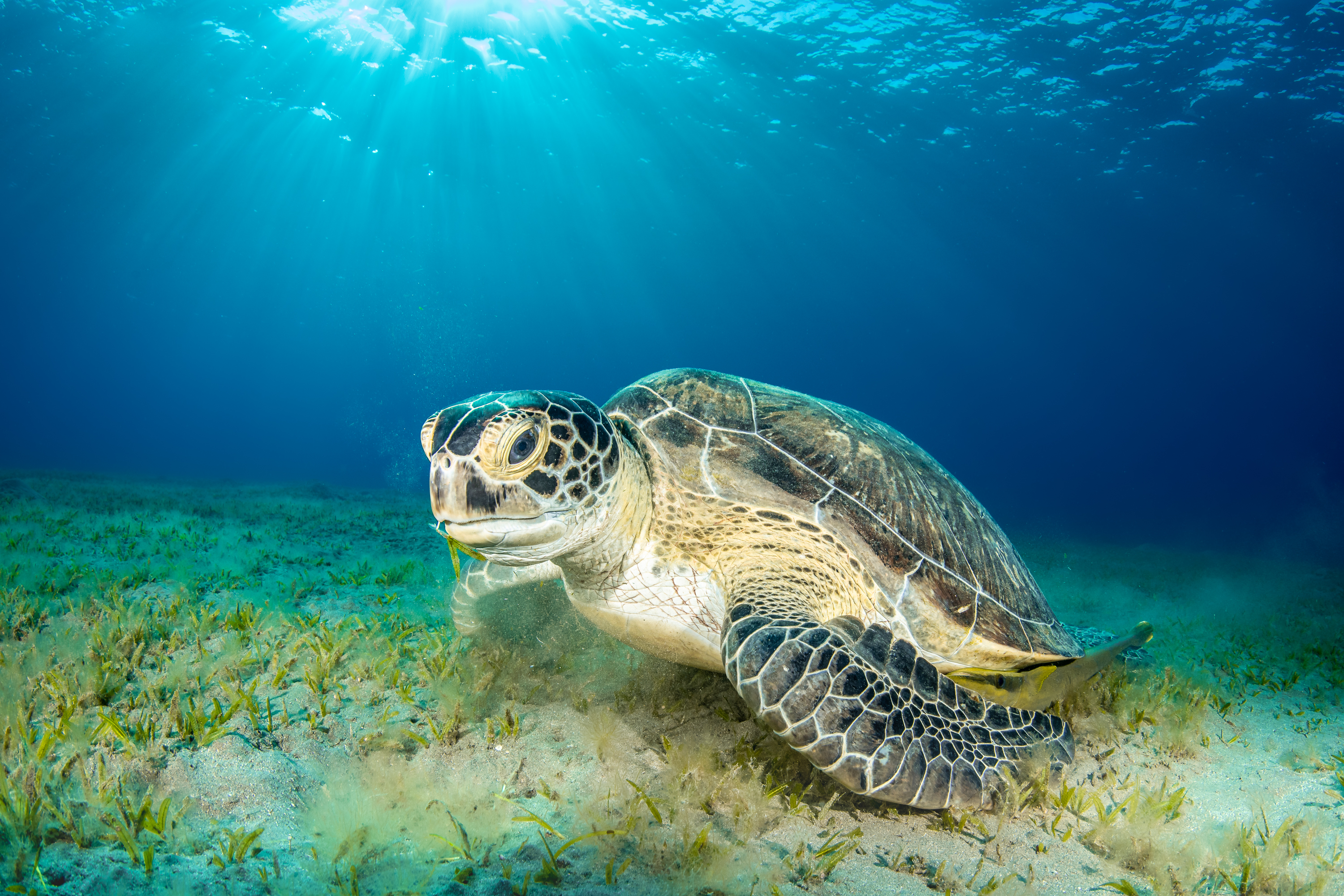
At sunset, divers make their final breaks for the surface, rising above swaying clusters of translucent moon jellyfish into the amber glow. Dinner follows, buffet-style, with grilled locally grown vegetables and local delicacies such as baklava and smoky kofta (grilled minced meat skewers). Later, some retreat to the intimate beachfront Bawadi Bedouin Lounge, where wine, local brews, and pulls of shisha pipes wind down the night.
What began as defiance is now a promise: to keep the Red Sea alive, not just for tourists, but for future generations to come

Your cart is empty