
Say Yes to Reefs in Egypt
The diver who said no to nine hundred hotel rooms and built Egypt’s most radical reef community instead.
Opinion
The Shape Of Now
Culture & Lifestyle

Photo: Camilo Jimenez - Unsplash
ICONYC Ma
The Shape Of Now
Culture & Lifestyle
An Honest Assessment of the State of the Present
Let us begin with something that most commentary refuses to say plainly: we are being managed. Not in the conspiratorial sense, not by a shadowy council in a windowless room, but in the far more mundane and therefore far more insidious sense, by systems, policies, and technologies that are being layered over daily life with increasing speed, justified at every step by reasons that sound entirely reasonable and that are, taken together, producing something that nobody voted for and almost nobody fully understands. We will get to the hope, because there is genuine hope, and it deserves to be stated as boldly as the problem. But the hope has to be earned, and earning it requires looking at the situation honestly first.
So here is the honest version. A child born today in almost any country on earth will live longer, have access to more knowledge, and face lower risks of violent death than at any previous point in recorded history. That is true and it is extraordinary and it matters. It is also, increasingly, a child who will be surveilled from birth, whose data will be harvested before they can speak, whose financial life will eventually depend on digital systems they cannot opt out of, whose travel will be tracked, whose carbon footprint will be calculated, and whose ability to participate in ordinary civic and economic life may, within a generation, be contingent on compliance with requirements that did not exist when their parents were born. Both of these things are true simultaneously. The challenge of the present moment is holding them together without letting either one cancels the other out.
Start with the challenge that lives closest to home, which is the state of human attention in the early twenty-first century. The smartphone and the platforms built around it have done something genuinely new to the experience of being a person: they have made it easier than ever before to be distracted and harder than ever before to be still. A significant portion of the population now finds sustained solitary thought genuinely difficult, not because people are less intelligent than their grandparents, but because they are carrying in their pockets a device engineered by some of the cleverest people on earth to compete for every available moment of mental bandwidth.
This is not an accident. It is a business model. The platforms that occupy most people's attention for several hours every day are not free in the sense of being without cost. They are free in exchange for your attention, your data, your behaviour patterns, your emotional responses, and your susceptibility to the advertising and the political messaging that those patterns make possible. You are not the customer. You are the product, and you are being refined and targeted and sold with a precision that the advertising industry of fifty years ago would have found incomprehensible.
The deeper damage is to the conditions in which human minds do their best work. Original ideas, genuine empathy, the slow maturation of a considered opinion, none of these are available on demand. They require unhurried interior space that distraction systematically prevents. When attention is permanently fractured, the ability to think clearly about complex problems, including the problem of the systems doing the fracturing, is the first casualty. This is, if you are the kind of person who wants a population that does not ask too many difficult questions, an extremely convenient outcome.
And yet the same technology that fragments attention has democratized access to knowledge on a scale that would have seemed miraculous to previous generations. The person in a rural village and the person in a capital city now have access to roughly the same information, the same arguments, the same counter-narratives. The barriers to self-education and to finding others who see what you see have never been lower. That is a genuine good, and the people who are most effectively using it are the ones who treat their own capacity for deep thought as the finite and valuable resource it actually is. Protect your attention deliberately. It is the first and most important act of resistance available to any individual right now.

Photo: Amos Bar Zeev - Unsplash
There is a deeper challenge underneath the attention question, and it has to do with how shared understanding is formed in a world where everyone's information environment is different. Democratic life depends at its foundation on a broadly agreed set of facts from which genuine disagreement can proceed. When that foundation fractures, when the facts themselves become contested along political and institutional lines, the quality of public reasoning suffers in ways that are difficult to repair and easy to exploit.
We are living through exactly this fracture, and it would be dishonest to minimize it. The algorithmic curation of information has sorted people into ecosystems that reinforce existing beliefs rather than challenging them. This is comfortable in the short term and, over time, makes the kind of collaborative thinking that complex societies require considerably harder. It also makes populations easier to manipulate, because a person who has been algorithmically sorted into a particular information environment is a person who has been pre-softened for particular messages.
But the picture is more interesting than the headline suggests. There is a genuine and growing counter-movement, a hunger particularly among younger people, for information that is rigorous, honest about its own uncertainties, and not obviously in service of someone's agenda. Independent journalism is finding new models and new audiences. Long-form writing and serious analysis have never had larger readerships. The appetite for depth has not gone away. It has intensified precisely in response to the noise, which is the only rational response to it.
The path through this is not a return to some imagined golden age of shared consensus, which was never as golden as memory suggests. It is the patient building of new habits: reading across the lines of existing beliefs, seeking the strongest version of arguments that instinctively provoke resistance, and cultivating the genuinely radical habit, in a culture that rewards speed and certainty, of saying out loud: I am not sure yet. I need more time with this.
Here is where the conversation gets uncomfortable, and where most mainstream commentary flinches. So let us not flinch.
Digital identity systems are being introduced across Europe and beyond with a speed and a confidence that the public debate has not kept pace with. The European Digital Identity wallet, the UK's expanding digital verification infrastructure, the various national digital ID schemes being piloted and rolled out across the democratic world, are being presented as conveniences. In many respects they are. A single digital credential that works across borders, that confirms identity without requiring a wallet full of physical documents, that simplifies access to public services, is a genuinely useful thing.
It is also a genuinely powerful thing, and power of this kind requires scrutiny that it is not currently receiving. A digital identity system is, by its nature, a system in which every use of that identity is recorded. Where you were, when, for what purpose, with what result. At present, the stated intent is that this data will be protected, that access will be limited, that the citizen retains control. These assurances come from the same governments and institutions that have, over the past two decades, consistently expanded the use of data collected for one purpose to serve purposes that were never mentioned when consent was sought. The gap between stated intent and actual practice in digital surveillance is not a conspiracy theory. It is a documented pattern, and treating it as paranoia is a form of willful naivety that has historically served the interests of those doing the surveilling.
The question to ask about digital identity is not whether it offers benefits. It does. The question is: what happens to the person who cannot or will not participate? In a world where digital identity becomes the gateway to banking, to employment, to healthcare, to travel, to government services, the person outside the system is not merely inconvenienced. They are functionally excluded from civic and economic life. That is a form of coercion, however gently it is packaged, and coercion applied through administrative infrastructure rather than visible force is still coercion.
Digital currency raises the same questions with even higher stakes. Central bank digital currencies are being developed by governments across the world, and the arguments for them are not without merit: reduced fraud, faster transactions, better financial inclusion, greater monetary policy precision. But a fully digital currency system, one in which every transaction is recorded and traceable and in principle subject to conditions, is also a system in which financial behavior can be rewarded and punished in real time, in which accounts can be frozen without physical intervention, in which spending can be restricted by category or geography or social credit, and in which the anonymous transaction, the cash purchase that leaves no record, becomes impossible. Cash is not merely a payment method. It is a form of financial privacy, and financial privacy is a form of freedom. A society without cash is a society in which every economic act is visible to the state. Whether you trust the current state is not the relevant question. The relevant question is whether you trust every future state, for the rest of the system's existence, with that visibility. The honest answer, if you have read any history at all, is no.

Photo: Alexander Grey - Unsplash
The push toward electric vehicles deserves an honest look, because the conversation around it has become so politically polarized that the legitimate questions are being crowded out by the noise from both directions.
The environmental case for electrifying personal transport is real. The combustion engine's contribution to urban air pollution, to carbon emissions, and to energy dependence on unstable geopolitical relationships is significant and well-documented. The technology is improving rapidly. The long-term trajectory toward electrification is, in all probability, correct.
The problem is not the destination. The problem is the mandate. The decision to set hard deadlines for the elimination of petrol and diesel vehicles, made at the level of national government and coordinated at the level of supranational institutions, without serious engagement with the practical realities facing ordinary people, is a case study in how not to implement a necessary transition. The person in a rural area who depends on their vehicle for work, whose nearest charging infrastructure is an hour away, whose household cannot absorb the cost of an electric vehicle even with subsidies, has not been given a choice. They have been given a deadline. That is not a climate policy. That is a class policy that happens to have a climate justification.
The legitimate question is not whether the transition should happen. It should, and it is happening. The legitimate question is who bears the cost, who makes the decisions, and whether the pace is determined by what is technically achievable or by what is economically manageable for the people being asked to manage it. At present, the answers are: those least able to absorb it, those furthest from democratic accountability, and the former. That should be said plainly, and it should be changed.
Beyond vehicles, the broader energy transition raises questions about the concentration of new infrastructure in the hands of a small number of companies, about the environmental cost of the minerals required for battery technology, about the grid capacity implications of mass electrification, and about the extent to which the shift from distributed fossil fuel use to centralized electrical systems changes the relationship between citizen and state. A petrol car running on fuel from a pump is difficult to remotely disable. An electric vehicle connected to a digital infrastructure is not. This may never matter. It is still worth noting.
There is an anxiety running through society right now that deserves to be taken seriously because it is not irrational and it is not fringe. It is the worry, held by a growing number of thoughtful people across the political spectrum, that the direction of travel, more surveillance, more data collection, more centralized coordination of daily life, is heading somewhere that liberal democracies were specifically designed to prevent.
The concern stated plainly is this: the combination of digital infrastructure, emergency-justified expansion of state powers, and the technical availability of population-level monitoring is creating conditions for a degree of government control over individual life that would have been unthinkable a generation ago. The tools were built for specific and often legitimate purposes. The pattern of their use has been consistent: they expand, they find new applications, and they rarely retreat. Contact tracing applications introduced during a health emergency do not disappear after the emergency. They become the foundation for the next system. Digital identity introduced for convenience becomes the gateway for compliance. Financial monitoring introduced for fraud prevention becomes available for tax enforcement, which becomes available for behavioral regulation. This is not speculation. It is the documented history of every surveillance technology introduced in the democratic world over the past thirty years.
Is the scenario of total government control across all aspects of life immediately likely in Western Europe or North America? At present, no. The institutional, cultural, and legal antibodies remain meaningful. Courts still function. Investigative journalism still exists. Civil society organizations still challenge overreach with some success. These are not decorative features of democracy. They are load-bearing structures, and they require active maintenance to remain effective.

Photo: JP Valery - Unsplash
What is worth watching with great attention is the rate of change and the direction of drift. Authoritarianism does not typically arrive as a sudden coup. It arrives as a series of reasonable-sounding exceptions, each justified by a genuine problem, each eroding a little more of the space between the citizen and the state. Emergency powers that outlast the emergency. Surveillance systems built for security that find wider application. Administrative conveniences that quietly become requirements. Opt-outs that become increasingly difficult to exercise. The pattern is consistent enough across history that treating it as the default trajectory rather than an aberration is simply the prudent position.
The social credit system in China is not a foreign curiosity. It is a demonstration of what becomes possible when digital identity, financial infrastructure, and social monitoring are integrated under state control. The Western versions of these systems are being built with different stated intentions and, currently, with more meaningful legal constraints. The architecture, however, is more similar than the framing suggests. The difference between a tool that could enable control and a tool being used for control is, at any given moment, the character and intentions of those holding it. That is a narrower margin of safety than a free society should be comfortable with.
This is the part where the conversation usually retreats into vague gestures about civic engagement and informed citizenship. Instead, here are specific things that an individual, a family, a community, or an institution can actually do.
Use cash. Regularly, deliberately, and as a matter of principle. Every cash transaction is a data point that does not exist. Every person who continues to use cash makes the infrastructure of cashless society slightly less total and keeps alive the principle that anonymous commerce is a legitimate feature of a free society. When shops move to cashless payment, the pushback of customers who insist on cash is not an anachronism. It is a democratic act.
Understand what you are signing. The terms and conditions you accept when you use a digital service are not meaningless boilerplate. They are legal agreements that transfer rights you may not know you have. Nobody reads all of them. That is by design. Reading enough of them, often enough, to understand broadly what you are agreeing to is a form of self-defense that requires time and is worth the investment.
Resist the framing of privacy as paranoia. The normalization of total digital transparency has been one of the more successful cultural projects of the past two decades. The person who asks why a service needs their location data, who declines unnecessary cookies, who uses a VPN, who pays in cash, who does not carry their phone everywhere, is frequently treated as either suspicious or eccentric. They are neither. They are exercising a right that exists precisely because its exercise is sometimes inconvenient for those who would prefer you not to. Treat privacy as the default rather than the exception, and treat the question of why any given system needs any given piece of your information as the first and most reasonable question to ask.
Build and maintain relationships outside digital infrastructure. The practical resilience of any community depends on its members being able to communicate, cooperate, and support each other through channels that do not depend on corporate platforms or state-managed systems. This sounds extreme until the platforms go down, the power goes out, or the terms of service change in ways that exclude you. Local relationships, physical meeting spaces, communication networks that function without internet connectivity, these are not preparations for catastrophe. They are the ordinary infrastructure of a community that has not yet fully outsourced its social life to systems it does not control.
Engage with local political processes. National politics is important and largely beyond the direct influence of any individual. Local politics is where the decisions about planning permission, about public space, about local infrastructure, about the physical environment in which daily life is lived, are actually made by people who can be reached and persuaded and, if necessary, replaced. The neglect of local civic engagement in favor of performing national political positions on social media is one of the more consequential strategic errors of the current era. Show up. Stand for things. Know your councilors and your local representatives by name. It matters more than the algorithm would like you to think.
Cultivate the habit of independent thought as a daily practice. This sounds abstract and is entirely practical. Read things that challenge your existing positions. Seek out the strongest available version of the argument you instinctively reject. Sit with uncertainty rather than resolving it prematurely into the nearest available certainty. Maintain the capacity to change your mind in response to evidence. These habits are both personally valuable and, in aggregate, the only reliable defense against the sophisticated manipulation of belief that is now available at industrial scale to any sufficiently motivated actor, governmental, corporate, or otherwise.
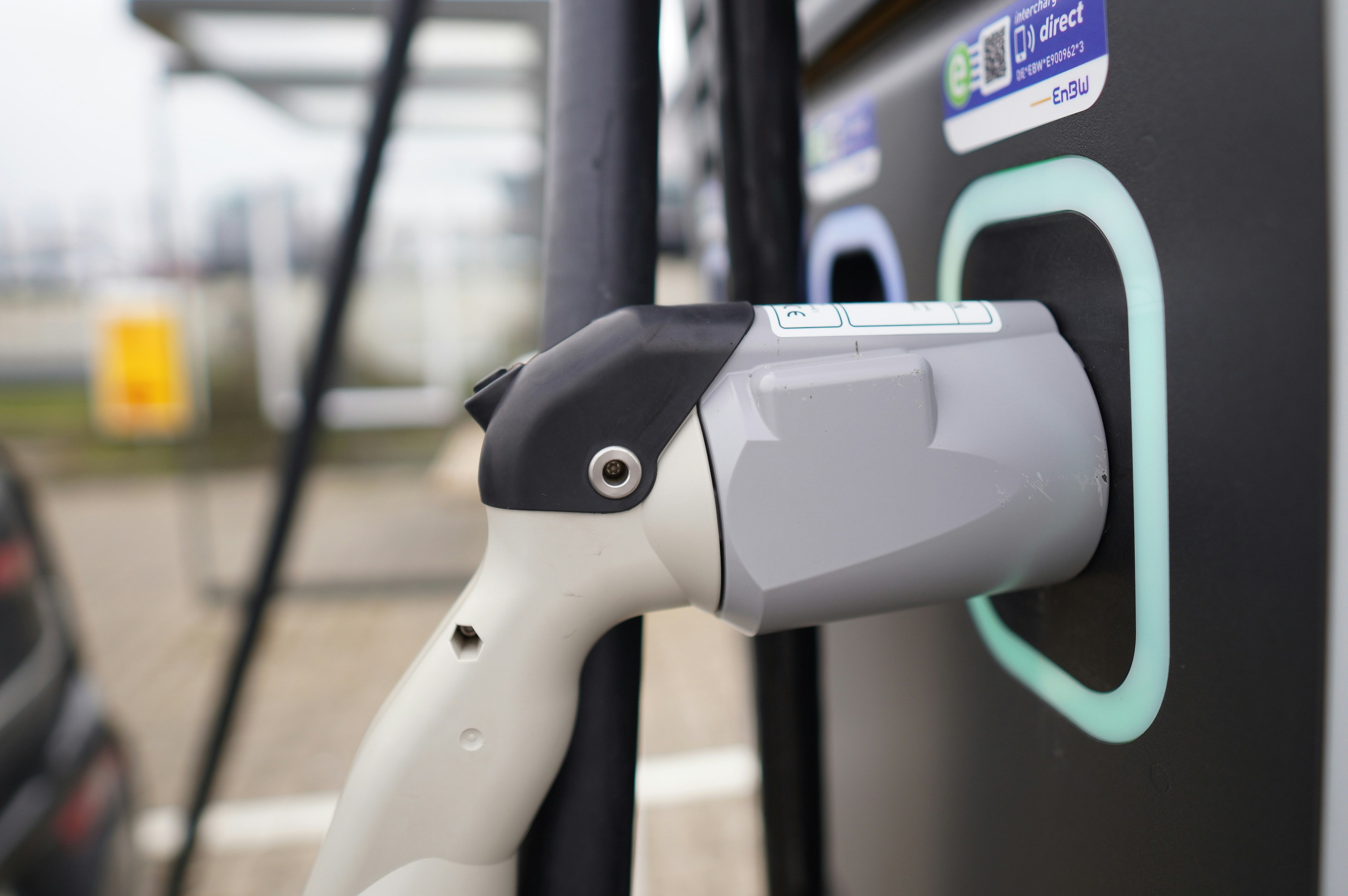
Photo: Sophie Jonas - Unsplash
Photo: Christian Harb - Unsplash
Pull back from the systems and the policies and the large forces, and what you find is something that has always been the most reliable source of forward motion in human affairs: individual people choosing to pay attention, to think carefully, and to act with integrity within their particular sphere of influence.
The problems of the present are real and structural, and they will require structural solutions. But structural solutions are made by people, and people are formed by habits, and habits are chosen. The most important choice available to any person right now is not which political party to support or which product to buy or which platform to use. It is the choice about how to think, what to protect, and what not to surrender without a fight.
We are living through a hinge moment. The questions being worked out right now, about how attention is governed, how identity is managed, how money flows, how energy is used, how power is distributed, and how much of private life remains genuinely private, are not peripheral questions. They are the questions. And the remarkable thing, the thing worth holding onto on the days when the news makes it difficult, is that they are still open. The answers are not written. They are being written, by the choices of actual people in actual communities making actual decisions right now, today.
The future is not happening to us. We are happening to it.
That means the ground beneath your feet is more solid than the noise suggests. It means the tools of resistance, legal, cultural, social, and personal, are more available than the scale of the challenge makes them seem. It means that the person who decides to think clearly, live deliberately, and refuse the comfortable substitution of safety for liberty is not a person swimming against an irresistible tide. They are a person standing on ground that millions of others are also standing on, even when the platforms and the policies and the people in the large buildings would prefer you to feel alone.
You are not alone. That, looked at clearly, is about as good a place to start as the human story has ever offered.

Photo: Veronica To - Unsplash

Your cart is empty