Coperni Ceases Operations
The spectacle didn’t fail. The structure did
Editorial
The New Flex: Effort Signaling
Business
Y/Magazine
Editorial
Business
Luxury's holiday campaigns have rediscovered the hand-drawn line. In an age of effortless images, the work itself has become the product, and the proof has become the pressure.
L
Look closely at one of the images from Prada's holiday campaign, and you will notice something advertising usually hides. An actor's face sits on top of a pencil sketch. The lines that came first have not been cleaned away. They are still visible beneath the photograph, as if the studio had left the scaffolding up on purpose.
It had. The campaign is called Drawing Prada: Animated by Hand, and the sketch under the face is its whole argument: a person was here first, with a pencil, and you are allowed to see the evidence.
The film was developed under the creative direction of Miuccia Prada and Raf Simons, with live-action scenes photographed by Glen Luchford and animation led by John Pomeroy. Pomeroy's career runs from Disney's The Rescuers and The Fox and the Hound to The Secret of NIMH and The Land Before Time. Every frame of the animation, Prada says, was drawn by hand. Actors including Sadie Sink and Maya Hawke step into the drawn world. Pomeroy, in the accompanying behind-the-scenes film, describes learning his craft with pencil and paper and wanting to pass it on.
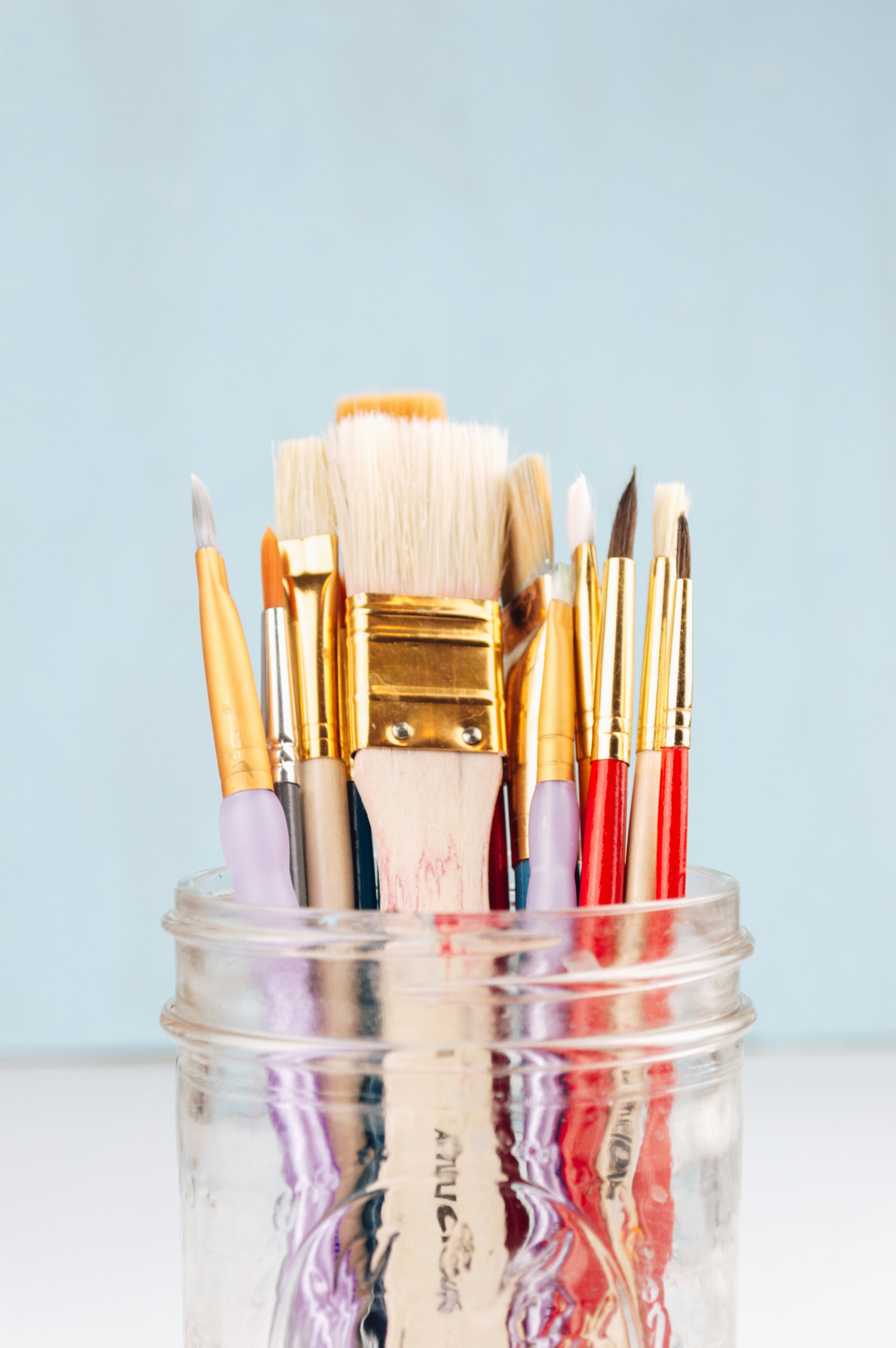
Prada is the most visible case of something wider. Hermès and Loewe marked anniversaries this year with hand-drawn or painted illustration. Porsche ran hand-drawn animation last Christmas. Apple has been photographing stop-motion clay, a few millimetres at a time. Levi's, Starbucks and Anthropologie have all reached for the handmade. Set against them is the cautionary example of Coca-Cola, whose AI-generated Christmas spots drew criticism in 2024 and again in 2025.
Commentators have given the pattern a name, effort signaling, and some use it as a sneer. That undersells it. A brand can mean its craft sincerely and also be aware that craft communicates. Both things are true at once, and the interesting question is why the message is landing now.
Economists call it a costly signal. A message is believable when it is expensive to fake. A peacock's tail works because only a healthy bird can afford it. Luxury has always run on the same logic: the saddle-stitched bag, the hours in the atelier behind a gown. The price is partly a receipt for time.
For most of the past century, that time was easy to assume. Then images became free. Generative tools can now produce polished, plausible footage in minutes, and feeds are filling with it. As brand consultant Linda Orr put it, "Finished is now the cheapest thing on the internet." In a world where polish costs nothing, polish stops meaning anything, and the scarce commodity becomes evidence of attention. Hand-drawn animation delivers exactly that: smooth movement can demand up to 24 separate drawings for every second of screen time, and nobody draws 24 pictures a second by accident.
That is why Prada's film shows its sketches. The craft is no longer assumed. It is exhibited. Pomeroy put the purpose plainly: hand-drawn and handcrafted work, he said, is still alive in the world today. The campaign is a demonstration of that sentence as much as a holiday greeting.
Viewers noticed, and approved. Reaction to Prada's film was warm in a way holiday advertising rarely manages. Some commenters said they were not usually interested in the brand and now were. Others simply thanked the artists. The effort registered as respect, which is the oldest thing luxury sells.
There is, however, a trap built into this strategy, and it is worth naming carefully.
When a brand sells proof of labour, it invites an audit of that labour. A campaign that simply says "here is our film" can survive a shortcut. A campaign that says "here is our craft" is held to a stricter standard, because the claim is the product. Another house's holiday film, released within days of Prada's, has been picked over frame by frame by viewers asking how exactly it was made. Those questions are being argued elsewhere. They are not ours to settle here, and the answers are not yet clear.
What the episode shows is not any one verdict but a change in the audience. Viewers who have spent a few years learning to spot synthetic images now inspect by reflex. They pause, zoom, count the fingers, ask for receipts. A behind-the-scenes film used to be a flattering extra. It is now a piece of evidence, and it will be read as one.
The practical consequence is simple and a little austere. The words a brand chooses are now part of its craft. "Hand-drawn" is a precise claim. "Drawn by hand with digital assistance" is a different one. The distinction, once invisible to audiences, is the thing they check first, and the brands that thrive will be those whose phrasing survives the pause button.
It is tempting to read all of this as a mood: a pendulum swinging back toward the human after a flood of the synthetic. That is partly right. But the deeper change is structural. Luxury has long sold the idea that someone cared enough to spend time. Machines have made time-spent harder to see, and so the houses are showing it, literally, in pencil.
Whether that holds will depend on something unglamorous: whether the proof is real, and whether the language around it is exact. The sketch under the face works only because it is true. Take away the truth and it becomes decoration, and audiences, it turns out, are very good at telling the difference.
Go back to that image. An actor's face, and under it the pencil lines that came first. It is a small picture of a large idea. In a world where anything can be made instantly, the most valuable thing a brand can show is that it chose not to.
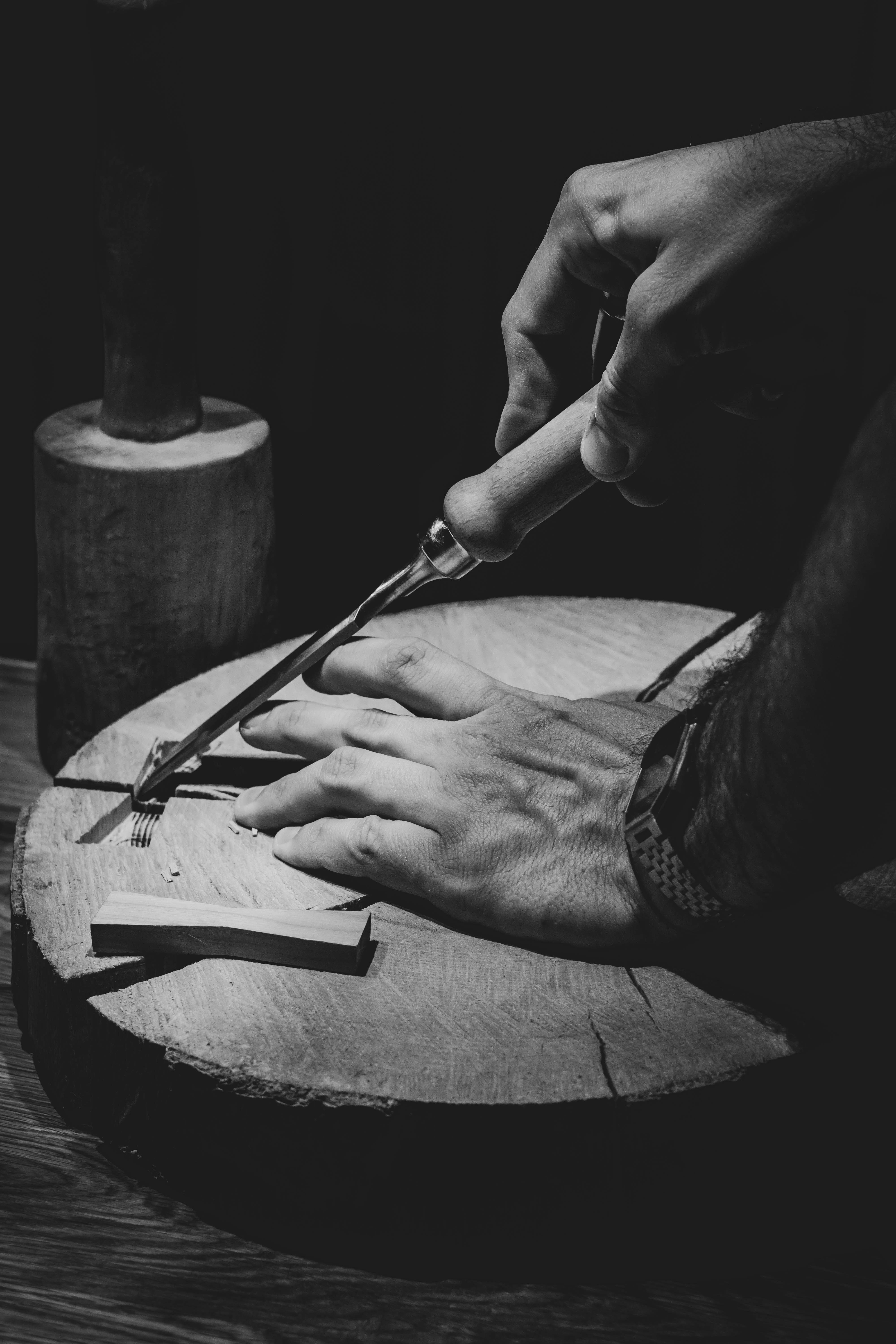
Photo by Sándor Szabó on Unsplash
Editorial
The New Flex: Effort Signaling
Business

Your cart is empty