One Van, Six Designers, Forty Years of Myth
Now the legend gets a second look
News
Coperni Ceases Operations
Fashion
Y/Magazine
News
Fashion
The spectacle didn’t fail. The structure did
Coperni sprayed a dress onto Bella Hadid and built a bag from 99 percent air. Its closure followed a fight with its own distributor, and the lesson is about who owns the business.
F
For about nine minutes on the last evening of Paris Fashion Week in September 2022, a room full of people who had seen everything watched a woman stand perfectly still while a liquid was sprayed onto her body. The room was the Musée des Arts et Métiers, a museum of technology housed in a medieval priory. The woman was Bella Hadid, in nude underwear, who had not rehearsed the sequence and admitted afterwards to being nervous. The liquid was a sprayable fabric that stiffened as it landed, and by the end of the finale an off-the-shoulder white dress existed where there had been none. The clip left the room before the audience did.
The brand was Coperni. On Wednesday, 4 November 2026, its two founders announced on Instagram that it had stopped operating.
Sébastien Meyer and Arnaud Vaillant met at the Mod'Art fashion school in Paris and founded Coperni in 2013, naming it after Copernicus, the astronomer who moved the sun to the middle of everything. Meyer ran the creative side. Vaillant ran the business. They won the ANDAM Creative Label Prize in 2014 and reached the LVMH Prize finals in 2015, and Vaillant once explained the project in a single line: it was their generation's duty to try something new.
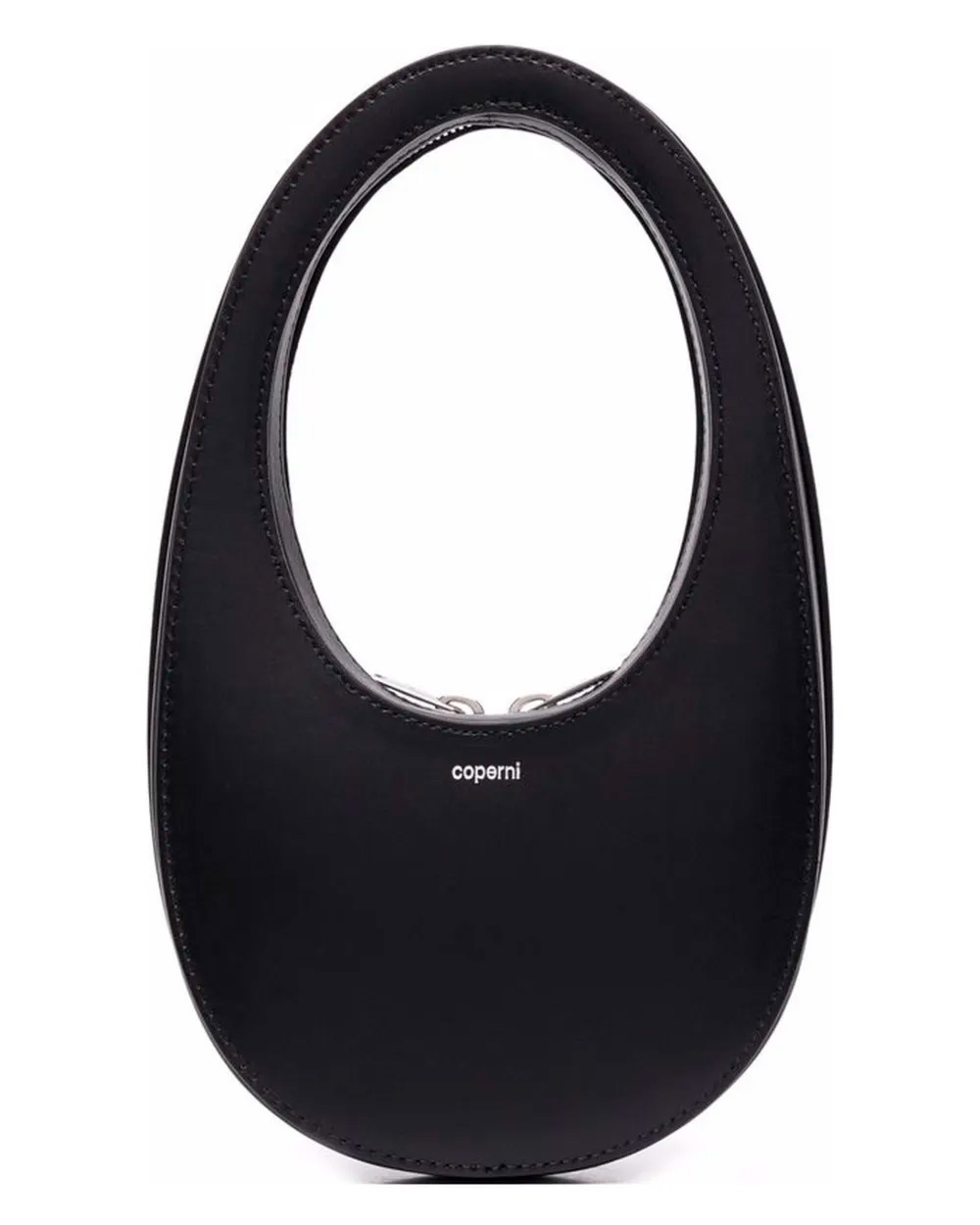
What followed was the most consistently unusual run on the Paris calendar. The Swipe bag, a flat oval named after the iPhone's slide-to-unlock gesture, arrived in 2019 and was rebuilt every season: in 18-karat gold that was melted down after the show, in a 55,000-year-old meteorite, with a working CD player inside it. In 2023, five Boston Dynamics robot dogs walked the runway among the models. In 2024 came a Swipe bag weighing about 33 grams, made from 99 percent air and 1 percent glass. That October, the brand staged the first fashion show held inside Disneyland Paris.
It is easy to file all this under stunts. It is harder to do so once you notice how much of it was real material research. The spray-on fabric was a genuine technology, and the air bag a genuine experiment in structure. The spectacle was the delivery system for the ideas, which is the reverse of how most fashion spectacle works.
The closure has a less glamorous cause than the shows. Since 2019, a London company called Tomorrow Ltd had been Coperni's majority shareholder, exclusive distributor and licensee. The arrangement was meant to give a young brand the scale it could not build alone. According to Coperni, Tomorrow stopped paying the sums it owed to the brand months ago. Tomorrow's new owner, Progetto 11, has characterised the situation differently.
Tomorrow was sold in March to Progetto 11, the parent company of an Italian e-commerce group. Earlier in the year, Coperni had skipped Paris Fashion Week. On 11 June, a Paris commercial court opened receivership proceedings to protect Coperni SAS, the company that holds the brand's creative and operational teams, 26 employees in all. Three bids reportedly came in, the highest said to be €400,000. None saved it. The founders say they tried to regain control and could find no solution.
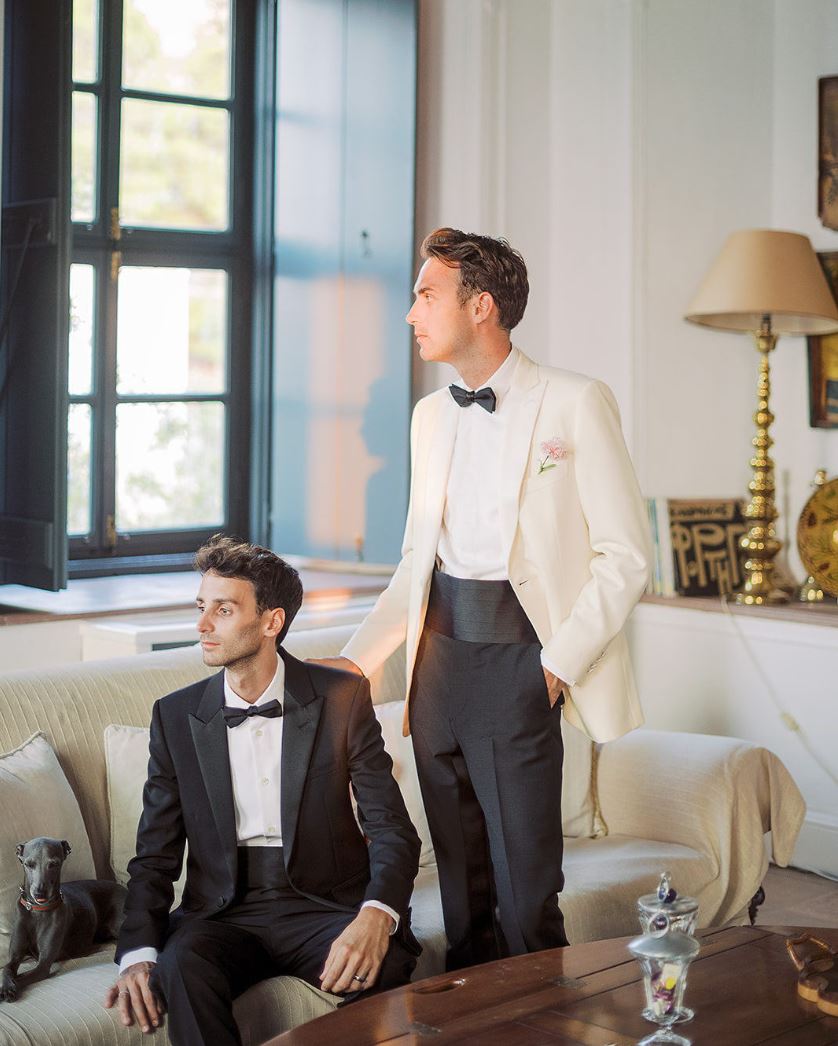
Sébastien Meyer & Arnaud Vaillant | @vogueweddings | Instagram
Three details deserve to be held in view. First, the business was not at its peak. Modaes reports that Coperni's global sales fell from €15 million in 2023 to €10 million in 2025, and a brand that shrinks by a third in two years is under strain whatever else is happening to it. Second, the closure covers the operating company. The Coperni word mark is reportedly held by a separate UK company, and who ultimately controls it is not clear from the reporting available. What happens to the name and the archive has not been stated, and the founders signed off with a "See you soon" that leaves a door open. Third, there are two accounts, and the fuller picture will take time. Coperni's is public. Tomorrow's owner sees it differently.
The convenient reading arrives quickly: a viral brand could not turn attention into a business. It flatters the instinct most of fashion already follows, which is that the safe thing is safe for a reason. There is something in it. Sales were slipping, and spectacle is expensive.
But that reading leaves out what actually ended the company: the structure around it. By Coperni's account, it was owed money by the entity that distributed its products, while the entity that made them controlled neither the cash nor, apparently, the name. Whatever the split of blame, the exposure is clear. A brand can be admired, copied and desired, and still be fragile if the company that collects the revenue is not the company that makes the product. This is the quiet risk in the shared-services model that has attracted many independent labels, in which a platform offers back-end resources in exchange for control of distribution and a stake in the business. The trade looks sensible while everything works. It looks different when the platform runs short of cash.
The second lesson is slower and more corrosive. Every industry has a risk appetite, and fashion's is already small. A brand that spent years proving that experimentation could earn attention, and then closed, hands every cautious executive a case study. It will matter little that the experiments were not, on the evidence so far, what ended it. A story told often enough becomes the reason.
The honest version of the lesson is narrower and more useful for the next young label. The risk is not only in the idea. It is also in who owns the plumbing.
Before the show in 2022, Meyer explained the fabric to a reporter in terms that now read like an epitaph. If you do not want the dress anymore, he said, you can put it back into the liquid and spray it again.
The material was reversible. Nobody has yet said whether the brand will get the same chance.

Your cart is empty