
The New Flex: Effort Signaling
A peek behind the curtain
Editorial
The Man Who Negotiates With Fire
Culinary Arts
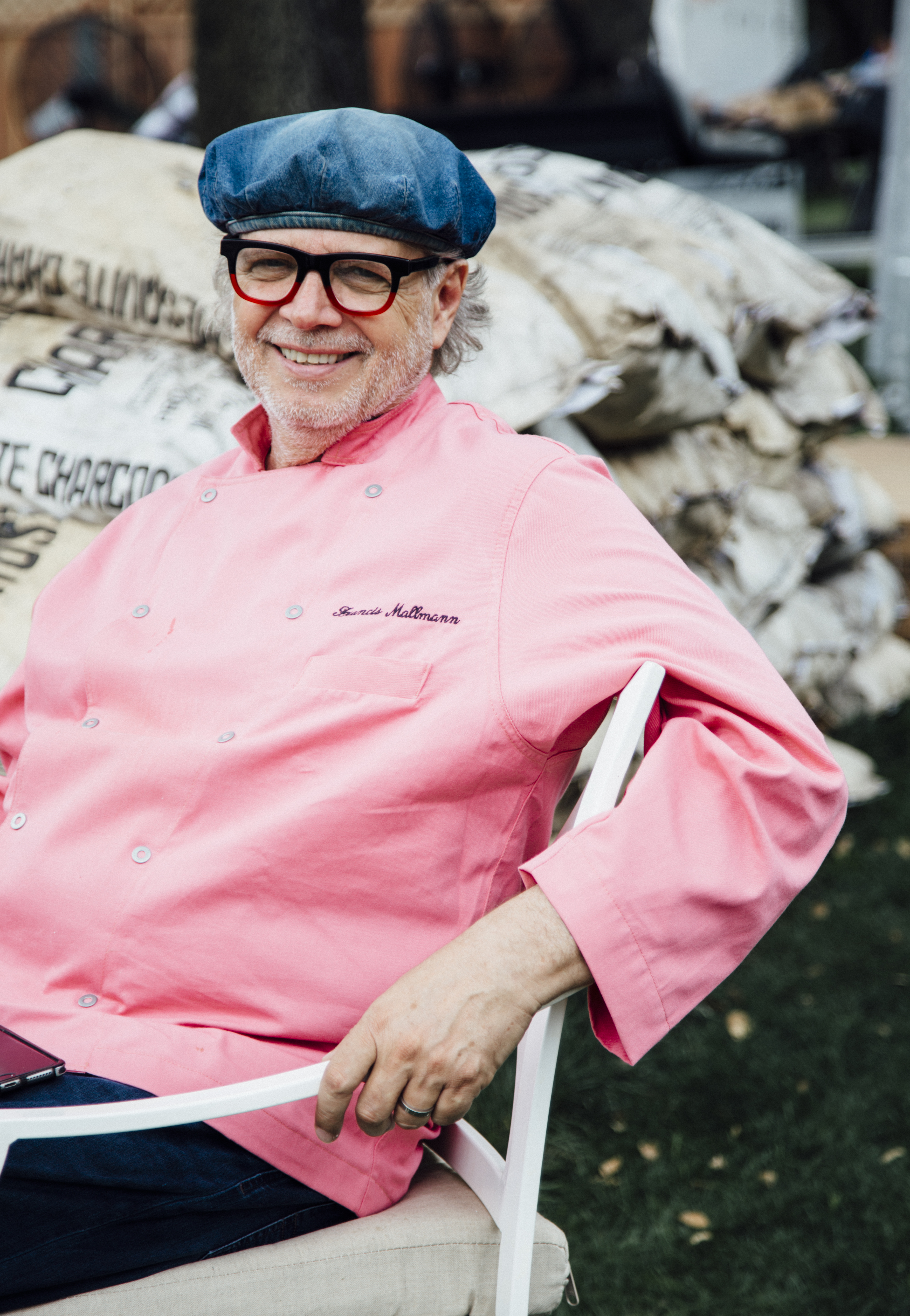
Audrey Mallmann in 2016 | Mflorpereyra
Y/Magazine
Editorial
Culinary Arts
Francis Mallmann has spent fifty years dismantling the kitchen. What he built in its place, on cliffs, riverbanks, and the open plains of Patagonia, is something closer to a philosophy than a restaurant.
Francis Mallmann
cooks with open fire on cliffs, lakeshores and in restored wineries. How the Argentine chef turned an elemental technique into a philosophy of patience, place and attention.
Somewhere on a Patagonian cliff, a whole lamb hangs over open flames. There is no timer and no thermometer. The man tending the fire watches the embers and the wind, and adjusts by instinct. Francis Mallmann does not cook, not in the conventional sense, at least. He orchestrates, choreographs and, in some ineffable way, conjures the act of cooking into a performance that transcends the plate.
To watch him is to witness a dialogue between fire, air, and the raw materials of the earth: meats, fish, vegetables, and the occasional wild herb foraged from Patagonia's stark landscapes. Mallmann's kitchens are rarely confined by walls; often, they are pitched under open skies, perched on cliffs, or situated beside the slow, rolling waters of Argentina's lakes and rivers. His philosophy is elemental, almost shamanic: to cook outdoors is to acknowledge the primacy of nature, seasonality, and the elemental processes that shape flavor.
Born in 1956 in Acassuso, a suburb of Buenos Aires, Mallmann's trajectory seems paradoxically unplanned yet inevitable. He trained formally in classical French cuisine, apprenticing in kitchens across Paris and later in other European culinary centers. Yet the rigor of the French brigade system and the sterile precision of Michelin standards never fully contained him. Returning to Argentina, he embarked on what would become a lifelong experiment in reconnecting cooking with landscape and ritual, a practice that has earned him both acclaim and a kind of mythic reputation in global gastronomy.
The decisive moment, according to Mallmann, came in the vast, windswept expanses of Patagonia. Here, the geography dictates technique. Steep cliffs, unpredictable winds, and the rugged isolation of his surroundings forced him to rethink the act of cooking not as a technical exercise but as an engagement with the elements. He learned to harness fire not as a tool to impose control, but as a medium to negotiate taste, texture, and aroma.
Mallmann's signature technique, the asado al asador, involves roasting whole animals on open spits, often over wood fires that he adjusts not by timers or thermometers, but by observation, intuition, and tactile understanding. It is a form of cooking that requires patience, attentiveness, and surrender. The process is ritualized: wood is selected for its aromatic contribution, embers are coaxed to ideal temperatures, and the meat is turned in measured intervals. To eat the results is to ingest a landscape, a moment in time, a history of fire and patience.
His restaurant, 1884 Francis Mallmann, in Mendoza, exemplifies this ethos. Situated in a restored 19th-century winery, it combines the architecture of colonial Argentina with a menu that celebrates open-fire techniques. Diners do not merely consume; they witness. The flames rise in the center of the dining room, the scent of roasting lamb wafting through beams and brick, and guests are reminded that the act of eating is inseparable from environment and ritual.
Mallmann's approach is antithetical to the enclosed, climate-controlled kitchens of haute cuisine. He writes in Mallmann on Fire: "Fire is alive. You cannot control it completely. You negotiate with it." For him, the unpredictability of wind, rain, or sudden shifts in temperature are not obstacles. They are collaborators. Cooking outdoors forces a recognition that flavor is a product of environment, not only technique.
This philosophy extends to his treatment of ingredients. Seasonal fish are prepared fresh from local rivers; vegetables are selected from nearby farms or foraged directly from the wild; herbs and edible flowers are integrated in a way that preserves their identity and relationship to place. There is an economy to this method: nothing is wasted, everything is contextualized. Eating Mallmann is, in a sense, learning to read the landscape on the plate.
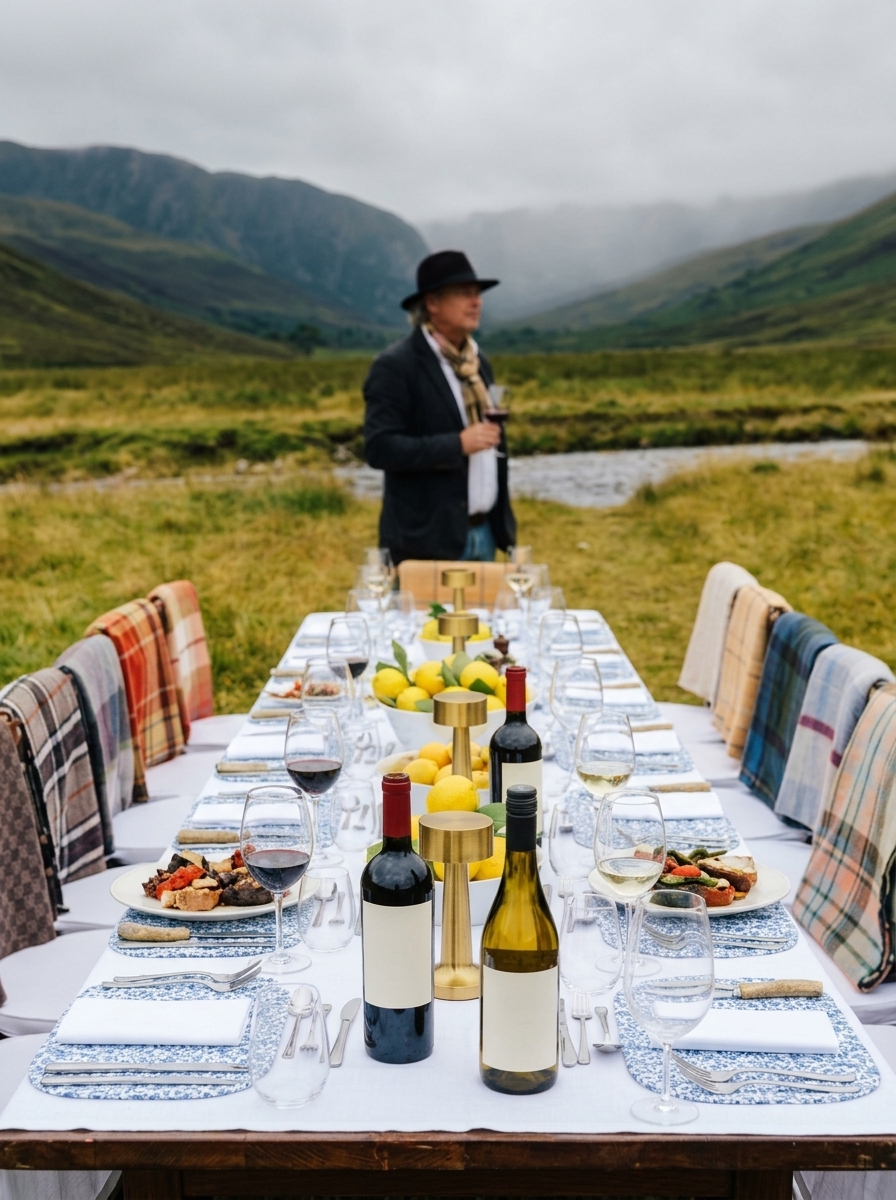
Beyond technical mastery, Mallmann cultivates a performative dimension in his restaurants. The act of cooking becomes a communal event, a choreography that unites diners, staff, and nature. In his kitchens, chefs may wield flames on open terraces as diners watch from wooden tables. Glasses clink, smoke drifts, and the ritual of feeding becomes as significant as the food itself. It is, in effect, a pedagogy of patience and presence.
Mallmann's influence extends far beyond Argentina. His appearances on international food programs, including Chef's Table and Anthony Bourdain: Parts Unknown, have positioned him as a global ambassador for elemental cooking. Yet his allure is not performative in the modern celebrity-chef sense. He is rarely interested in spectacle for spectacle's sake; the drama is inherent in the act itself.
He has published multiple volumes, including Mallmann on Fire and Patagonia a la Parrilla, each part memoir, part manifesto, part technical manual. Reading them, one is struck less by recipes than by the insistence that cooking is inseparable from place, patience, and attention. His writing, like his kitchens, encourages reflection: each dish is a lesson in geography, each flame a meditation on temporality and flux.
Beyond Mendoza, Mallmann has established a series of restaurants in Argentina, Uruguay, and Chile, each a laboratory for his fire-centric philosophy. Garzón, a village in the Uruguayan countryside about 14 miles inland from the Atlantic coast, brings Uruguayan ingredients together with Patagonian technique. The experience is immersive: diners cannot separate taste from setting, ingredient from ritual.
In Buenos Aires, Patagonia Sur and other urban projects adapt open-air principles to city constraints. Fire pits, chimineas, and outdoor grills bring the spirit of Patagonia into metropolitan environments. Even here, Mallmann's ethos is clear: food is an act of environment, a negotiation with elements that extends beyond the kitchen walls.
Mallmann's work is as much ethical as it is aesthetic. The centrality of fire and open-air cooking demands that ingredients be respected, seasonal, and sustainably sourced. Guests are encouraged to slow down, observe, and participate in the preparation of their meals. Eating becomes an ethical and sensory engagement. In an age dominated by processed, industrialized, and mass-produced food, Mallmann insists that conscious attention and temporal investment are part of taste.
This philosophy intersects with larger cultural trends: locavorism, the slow-food movement, and gastronomic minimalism. Yet Mallmann predates many of these movements. He does not frame himself as reactionary or prescriptive; his ethic emerges organically from environment, experience, and curiosity. The flame itself becomes a teacher, revealing lessons in temperament, timing, and humility.
Fire, for Mallmann, is more than heat. It is a lens through which he interprets life. Its unpredictability mirrors the flux of human experience; its capacity to transform raw material into sustenance mirrors creativity; its communal warmth mirrors social cohesion. In a 2015 interview, he said: "When you cook with fire, you are never separate from what you are cooking. You are negotiating, observing, learning. Fire teaches patience and respect."
Watching him in action, one understands that Mallmann's genius is partly technical, partly performative, but mostly philosophical. He converts cooking into a medium for reflection, attention, and immersion in place. Eating at a Mallmann restaurant is not a transaction; it is an initiation into a worldview where flavor, ritual, and environment are inseparable.
Editorial
Culinary Arts
Mallmann's reach has expanded globally, inspiring chefs from London to New York to reinterpret open-air principles in their own kitchens. Yet, unlike many celebrity chefs, he remains intensely focused on the experiential, not the promotional. The theater is in the restaurant, the patio, the plateau. His vision is holistic: cooking is not an isolated act, but a dialogue with geography, seasonality, and community.
He has inspired not only chefs but also cultural conversations about how food is produced, presented, and consumed. In an era of fleeting culinary trends, his insistence on elemental technique, patience, and ritual acts as a countercurrent to commodified taste, offering instead a model of engagement, observation, and ethical consumption.
Through the years, Francis Mallmann stands as a reminder that cooking is not merely a technical skill but a lens on life. His restaurants are stages, his kitchens laboratories, and his flames tutors in patience, observation, and respect. He teaches that food is inseparable from environment, that flavor is inseparable from context, and that eating is as much an act of reflection as it is of sustenance.
To dine with Mallmann is to participate in a ritual that predates the industrialization of cuisine, yet remains intensely relevant in the contemporary world. Fire, wind, and seasonality become metaphors for human experience, and in the smoke and heat of his kitchens, one learns that the essence of flavor is inseparable from attention, ritual, and place.
Francis Mallmann, with his open-air philosophy and elemental approach, offers more than gastronomy. He offers a meditation: on patience, on observation, on respect for the natural world, and on the profound ways in which we can engage with life through the act of cooking.
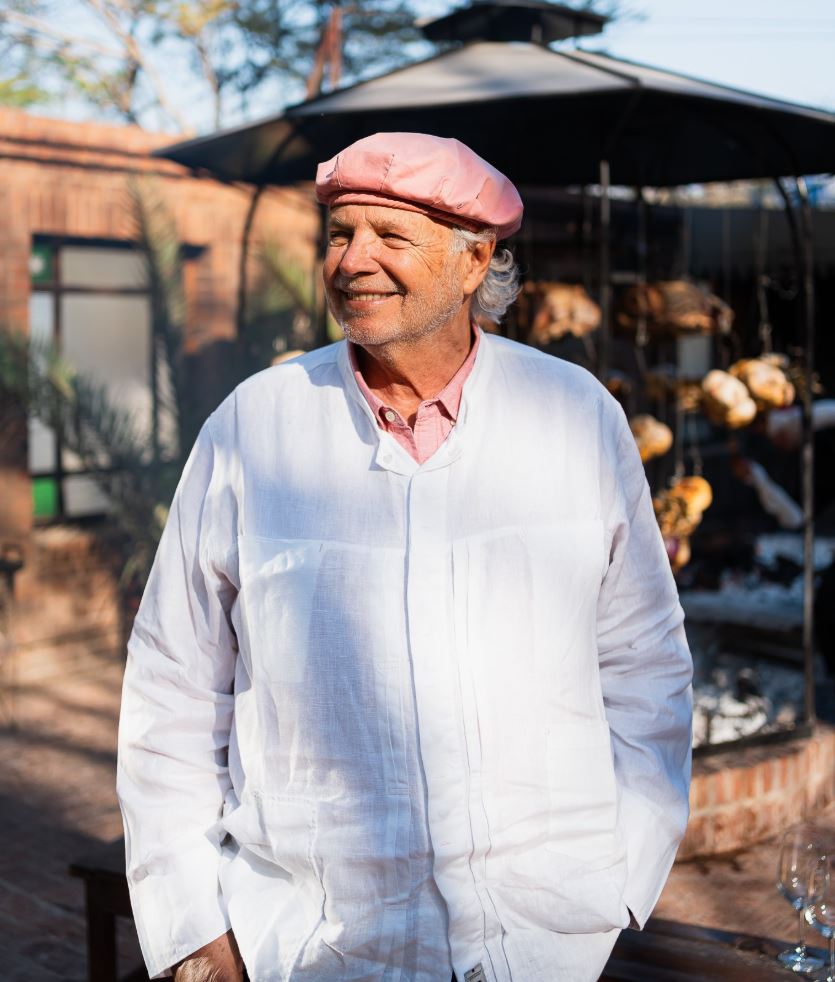
@losfuegosfaena | Instagram

Your cart is empty