The Man Who Negotiates With Fire
Editorial
The New Smart
Business
Y/Magazine
Editorial
Business
The
New
Smart
Jensen Huang refused to answer a simple question. The refusal turned out to be the most precise diagnosis available of what the age of artificial intelligence is actually doing to the concept of human intelligence — and what it demands instead.
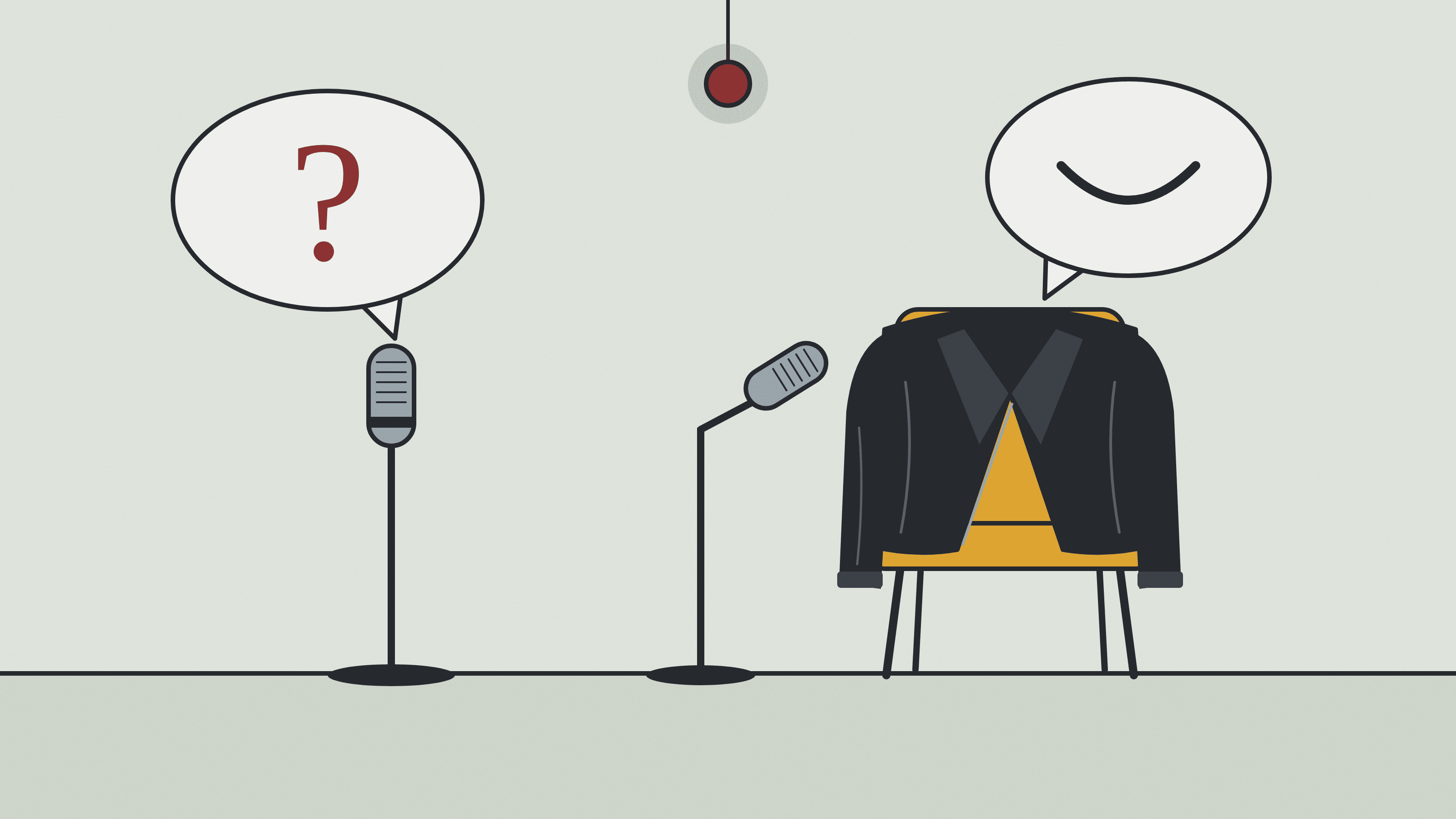
Jodi Shelton asked him who the smartest person he had ever met was.
It was a reasonable question, put to one of the most powerful figures in the technology industry, on a podcast called A Bit Personal, sometime in January 2026. Jensen Huang, founder and CEO of NVIDIA, the company that built the infrastructure on which the artificial intelligence revolution is running, and at that point the seventh-wealthiest individual in the world, sat with the question for a moment. He smiled. He did not answer it.
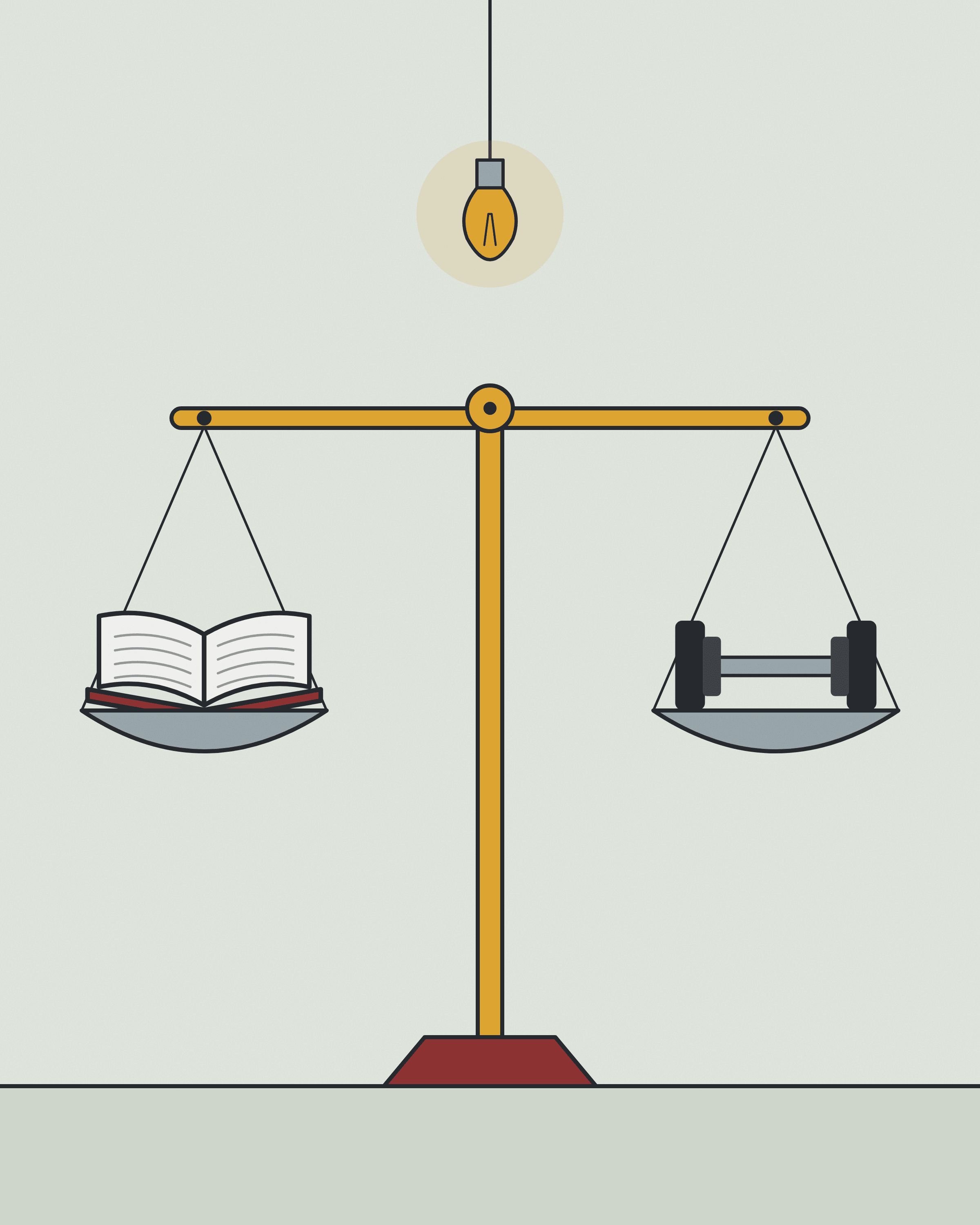
What he said instead was this: the question itself was wrong. The definition of smart it assumed, the one the world has been operating with for most of the history of formal education, was a definition that AI had just finished rendering obsolete. And the replacement definition, the one he proposed in its place, was so different from the original that it amounted not to a revision but to a full substitution: a new set of criteria for what it means to be intelligent, arriving just as the old ones stopped mattering.
This would have been interesting if it had come from a philosopher or an educator. Coming from the man who, more than anyone else alive, has built the systems that are doing the rendering obsolete, it was something else: an acknowledgement that the ground had already shifted, spoken by the person most responsible for shifting it.
The Commodity
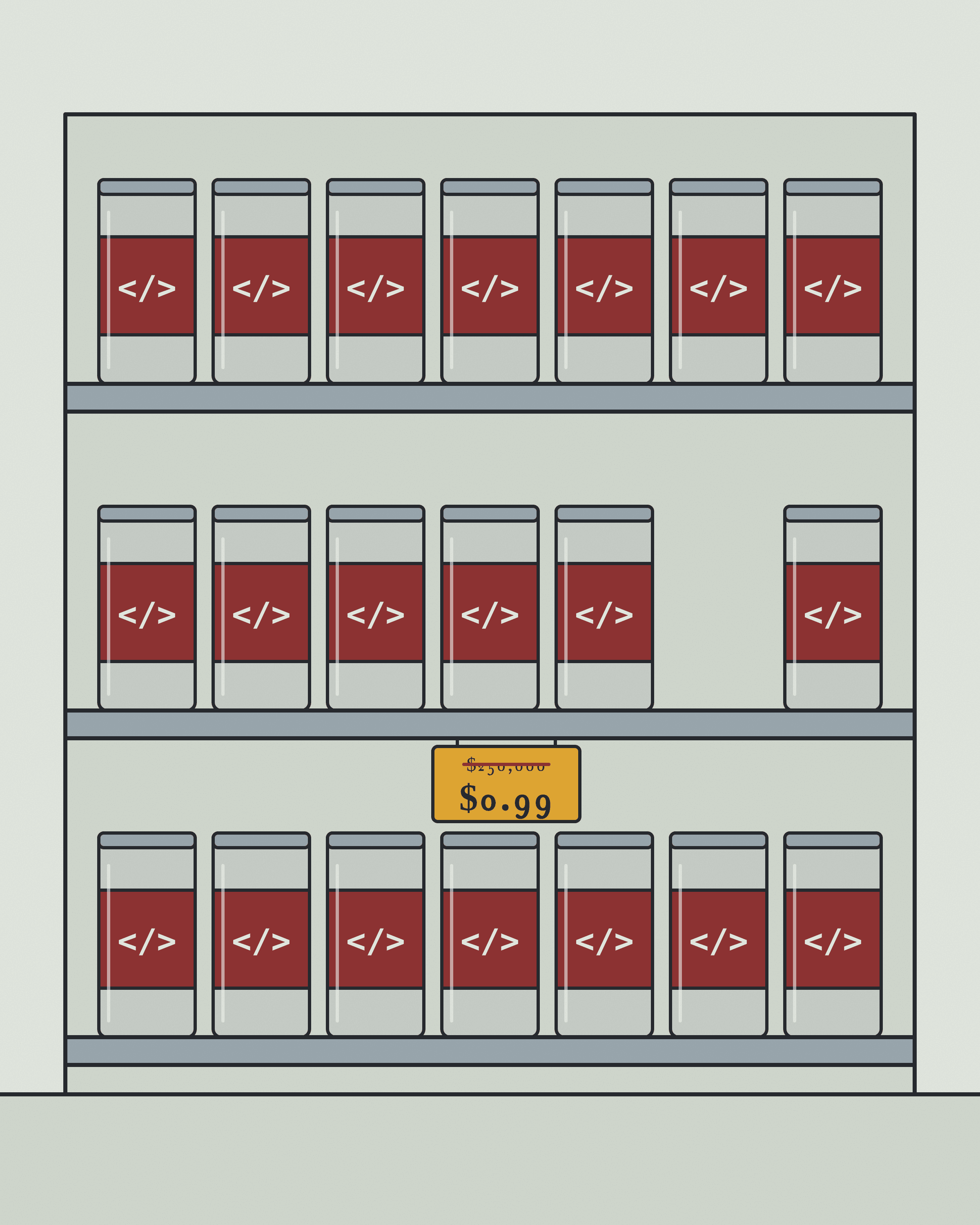
Huang's articulation of the old definition was precise. The kind of smart the world has historically rewarded, he said, is someone who solves technical problems: the person who writes the code, optimises the system, masters the machine, resolves the complex equation. For decades, this was not just valued. It was the definition. Programming in particular had accrued a kind of cognitive prestige that very few other skills could claim: the software engineer as the archetype of the intelligent professional, commanding the highest graduate salaries, filling the most competitive roles, earning the institutional respect that the twentieth century had once reserved for doctors and lawyers. To be able to build the thing, technically, was to be demonstrably smarter than most.
Huang's observation was that this form of intelligence is becoming a commodity. AI can now write code. It can analyse massive datasets, optimise systems, solve the kind of technical problems that once required years of specialised training to approach. It is doing these things faster, at greater scale, and at lower cost than the human who spent four years at a top engineering school acquiring the same capability. The capability still exists in the human. It has simply stopped being the thing that differentiates them.
He framed this without sentiment and without comfort. He was not saying that technical ability does not matter. He was saying that it matters the way that literacy matters: as a baseline, a floor, a condition of participation rather than a competitive advantage. And he was saying this as the CEO of the company whose products have done more than any others to bring that condition about. There is a specific kind of authority that comes from the person who built the thing telling you what the thing does. Huang has that authority. He used it with characteristic directness.
Y/Magazine
Editorial
Business
The New Definition
What he proposed in its place has three components, and understanding them separately matters because they are not equivalent in their novelty.
The first is technical astuteness. Huang did not abandon the technical dimension. He retained it as a necessary condition, which is different from treating it as a sufficient one. The person who will be genuinely useful in the world he is describing still needs to understand the systems they are working within: how the technology functions, what its limits are, where its outputs can be trusted and where they cannot. What has changed is that technical astuteness alone, without the other two components, produces a person who can operate the machine but not guide it. And the guidance problem is the one that scales.
The second component is human empathy. This is where the definition becomes genuinely counterintuitive, arriving from a man who runs the world's most significant semiconductor company. The person Huang is describing as smart is not the most technically capable person in the room. They are the person who can read the room: who understands what the people in it need, what they are afraid of, what they are not saying. This is not soft skill as afterthought. It is, in his framing, the primary competitive advantage that remains after the technical layer has been commoditised. Machines can solve the explicit problem. They cannot, yet, reliably identify the implicit one. They cannot feel the human stakes of a decision. They cannot understand why the technically correct answer might be the wrong answer for the specific people who are going to live with it.
The third component is the most interesting, and the hardest to acquire through any conventional educational path. Huang called it the ability to infer the unspoken, to see around corners, to preempt problems before they show up. His precise formulation:
"People who are able to see around corners are truly, truly smart. To be able to preempt problems before they show up, just because you feel the vibe. And the vibe came from a combination of data analysis, first principle life experience, wisdom, sensing other people, that vibe."
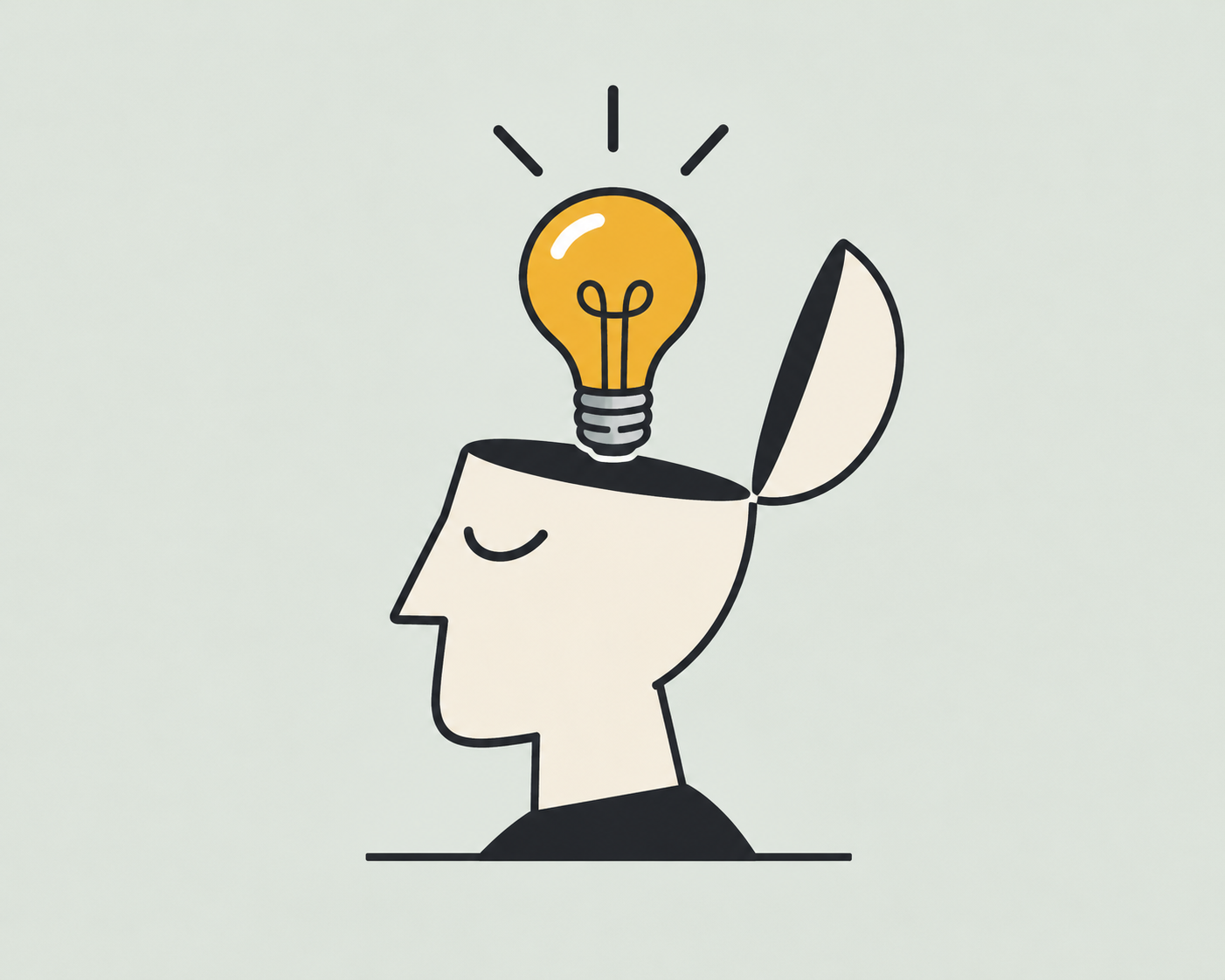
The word he chose was vibe. This is not a technical term. It is not a measurable output. It does not appear in any curriculum. It is the kind of word that, in a different register, would be dismissed as the vocabulary of someone who cannot be more precise. Huang is being precisely imprecise, because what he is describing is something that is not reducible to precision: the integration of explicit data with tacit knowledge, of formal analysis with intuitive pattern recognition, of what can be read in a spreadsheet with what can be read in a person's face when they are not saying the thing they mean. The vibe is the signal that emerges when all of these are running simultaneously, and it is the signal that nobody has yet found a way to train a model to produce reliably.
He added, with what read as deliberate provocation: the person who has this quality might score horribly on the SAT.
The Curriculum He Never Had
To understand why Huang holds this position with such conviction, it helps to understand how he arrived at it, which is not through the educational path that the SAT was designed to predict.
He was born in Tainan, Taiwan, in 1963. When he was five, his family moved to Thailand. When he was nine, his parents made the decision to send him and his older brother to the United States, to live with an uncle in Tacoma, Washington, and secure the educational opportunity that the instability of Southeast Asia in the early 1970s made uncertain. The uncle, a recent immigrant himself, enrolled the boys in what he believed to be a prestigious boarding school. It was the Oneida Baptist Institute in rural Kentucky, a religious reform academy for troubled youth. Jensen Huang, aged ten, cleaned toilets. He was bullied. Ethnic slurs were standard. Knives appeared. He shared a dormitory with the kind of boys that systems designed for second chances tend to collect.
He taught his illiterate seventeen-year-old roommate to read. His roommate taught him to bench press. The exchange is not incidental. It is the first recorded instance of a transaction that would define everything Huang built: the simultaneous giving and receiving of something real, between people who needed each other, in circumstances that left no room for the comfortable performance of status.
His parents eventually discovered the situation and removed him. The family settled in Oregon. He attended Aloha High School, where he played competitive table tennis at a national level, a sport that rewards exactly the quality he would later name as central to intelligence: the ability to read what an opponent is about to do before they do it, to see around the corner of the next shot. He waited tables at Denny's. He met his wife as a lab partner in an engineering class at Oregon State University. He took a master's degree from Stanford at night while working full-time in Silicon Valley, first at AMD, then at LSI Logic, where he ran a division generating $250 million in annual revenue. He co-founded NVIDIA in April 1993 at a booth in a Denny's in San Jose, with two friends and $40,000 in starting capital.
The company nearly failed. It failed, specifically, when NVIDIA's first product was designed for the wrong target. Sega had been their anchor client for the NV1 chip, built around a specific rendering approach that the market moved away from before the chip shipped. Huang had to call the CEO of Sega himself and tell him that their own product was the wrong approach, that Sega should find another partner, and that NVIDIA would nonetheless need full payment or it would be insolvent. He made that call knowing it was the right thing to do and that it might end the company. Sega paid. NVIDIA survived. He has described the experience as clarifying: the moment when you have nothing left to protect except your integrity, the decision becomes easier.
The company went public in 1999. When the stock hit $100 per share, Huang had the NVIDIA logo tattooed on his left shoulder. He has admitted he would probably not get another tattoo. The gesture is consistent with a certain quality that runs through all accounts of Huang across the span of his career: a preference for the permanent over the provisional, for the committed position over the hedged one.
He now wears leather jackets almost universally, in venues where the dress code expects something different, with the specific nonchalance of someone who has been doing this long enough to know that the jacket is not the message. The message is that the person wearing it built the most valuable company in the history of the semiconductor industry from a Denny's booth, and has been telling the same story about what that required since before anyone was listening at the necessary scale.
The Suffering Curriculum
A year before the podcast question, speaking at the Stanford Institute for Economic Policy Research in March 2024, Huang had arrived at the same destination from a different angle. Asked what advice he would give students to maximise their chances of success, he said: "One of my great advantages is that I have very low expectations."
He continued: "Most Stanford graduates have very high expectations, and you deserve to have high expectations because you're graduating from one of the finest institutions on the planet. But people with very high expectations have very low resilience, and unfortunately resilience matters in success."
His conclusion, delivered to a room full of students who had followed every conventional marker of intelligence toward the most prestigious institutions in the country: "I don't know how to teach it to you except for: I hope suffering happens to you."
Huang elaborated on what he uses the phrase for inside NVIDIA: "I use 'pain and suffering' inside our company with great glee. I mean that in a happy way. Because you want to refine the character of your company. You want greatness out of them. And greatness is not intelligence. Greatness comes from character, and character is formed from suffering."
These two statements, delivered a year apart in different formats, are the same argument. The podcast formulation is about the future definition of smart, about what quality will be most valuable in an age when the technical layer has been commoditised. The Stanford formulation is about how that quality is formed, about what kind of education actually produces it. Both arrive at the same place: the thing that matters cannot be taught in the way the system teaches, cannot be measured in the way the system measures, and was never acquired through the path the system rewards.
He is describing what a decade cleaning toilets in Kentucky and nearly losing NVIDIA before its first product shipped actually produces in a person. He is describing what it gives you that a perfect SAT score does not. He is describing, from the inside, the formation of the quality he considers most intelligent: the ability to see around the corner, not because you have calculated all the variables, but because you have been in enough corners to know what tends to live there.
What the Machine Cannot Read
The piece of Huang's definition that sits most uncomfortably with the current moment is the empathy component, because it sits most uncomfortably with the conventional image of the technology industry that Huang has, in large part, shaped.
Silicon Valley has not historically celebrated empathy as a competitive advantage. It has celebrated a different set of qualities: technical mastery, speed, the willingness to move fast and accept the collateral damage that comes with it, the capacity to hold the long view while those around you are asking about the short-term. These are real qualities, and they have produced real things. But they are not empathy. And the organisations built most purely on them have produced, alongside their genuine achievements, a category of problems that are precisely the problems that arise when the human stakes of a decision are not legible to the people making it.
Huang is not making a political argument about Silicon Valley's cultural failures. He is making a technical argument about what AI cannot yet do. The gap between what a model can produce and what a human situation requires is, in his view, exactly the empathy gap: the space between the technically correct output and the humanly appropriate response. Filling that gap is the work that will not be automated first, because it requires the kind of knowledge that is not captured in training data: the knowledge of what it feels like to be the person on the other side of the decision, what they need that they cannot articulate, what they are afraid of in ways they have not named.
This is the "unspoken" in his formulation. The inference of the unspoken is, structurally, what empathy is: the movement from what someone says to what they mean, from the explicit message to the implicit need. It is a skill developed through sustained exposure to human beings in situations where the stakes were real, where the feedback was immediate, where getting it wrong had consequences that the performer of the inference had to live with. It is not a skill developed through optimising a loss function.
The AI cannot feel the vibe. It can model it, can produce outputs that approximately resemble what the vibe would produce if you described it in text. But the vibe itself, the lived, embodied, contextual, historically-formed awareness of what is happening in a room, is not available to a system that has never been in a room. That unavailability is the competitive advantage Huang is pointing to. It is not sentimental. It is structural.
The Person Who Scores Horribly on the SAT
There is a demographic implication in Huang's definition that he names directly and that the educational and professional establishment has largely preferred not to sit with.
The person who scores horribly on the SAT, in his formulation, might be the smartest person in the room under the new definition. This is not a comfort to the institutions whose primary function has been selecting for the qualities that produce high SAT scores. Those qualities, broadly, are: the capacity to absorb and reproduce structured information at speed, the ability to perform well under standardised conditions, a specific kind of pattern recognition trained on the format of standardised tests, and the sustained focus required to prepare for them. None of these are without value. None of them are what Huang is describing.
What he is describing is more likely to be developed by a person who has had to navigate genuinely uncertain situations, who has had to read people without the benefit of formal preparation, who has faced consequences for misreading them, who has had to identify problems before they became crises because the cost of not doing so was immediate and personal. The Kentucky dormitory. The Sega phone call. The near-failure of the company, repeated over years, before the market caught up to the bet.
The educational system has been selecting for one set of qualities and calling it intelligence. The AI revolution has been the test of whether that selection was correct. Huang's position, stated from the vantage point of the person who built the test, is that it was not, or not exactly: that the selection captured something real but left out the thing that turns out to matter most when the machine can do what the selection optimised for.
The qualifier he used in the podcast is worth staying with: "I think it's gonna be the future definition of smart." He was careful. He said future. Not current. The educational system has not changed yet. The selection criteria at most prestigious institutions have not changed yet. The market for the technical skills being commoditised has not fully repriced yet. He is describing a transition in progress, which he can see because he is closer to its driving mechanism than almost anyone else alive.
The transition will not be instantaneous. The institutions that built themselves around the old definition have too much infrastructure, too much invested identity, too many stakeholders who succeeded under the old terms, to reprice quickly. But the pressures that force repricing are structural, not optional. When the capability that justified the premium is widely available at low cost, the premium migrates. The question is where it migrates to.
Huang's answer: the intersection of technical understanding, human empathy, and the ability to infer what nobody is saying. The person who can hold all three simultaneously. The person who might score horribly on the SAT. The person who cleaned the toilets and taught the roommate to read and understood, in the dormitory at Oneida, Kentucky, that reading people is not a soft skill but the hardest one, and has been building toward that understanding ever since, in leather jackets, at Denny's, in the company he founded that became the most valuable in the history of its industry.
He smiled. He refused to answer the question.
The refusal was the answer.