
Yohji Yamamoto's Lost Drawings Become a Book
News
Nothing Bets on No Screen
Architecture & Design
Nothing
Y/Magazine
News
Architecture & Design
Nothing Bets on No Screen
The iPhone moment can wait. The tool can't.
Nothing will ship its first AI-native device in December, with no screen and no app to speak of. Carl Pei's argument is that AI does not need a revolution, only better context.
The teaser is a single image: a matte, dark, rounded object under the words "Coming Soon." It has no screen. It has no name. It has a month. Nothing, the London company that made its name by showing the insides of its gadgets, has told the world that the first piece of AI hardware it will sell is something you cannot see into, and that it ships in December.

Nothing / Instagram
In early November, founder and chief executive Carl Pei confirmed that Nothing's first AI-native product will ship in December. He described it as a productivity tool without a screen, and said its functions "couldn't have been an app." Nothing has not disclosed its name, its price, its specifications, or its exact form. Several outlets have guessed that it is an ambient capture device of some kind, perhaps a recorder. That is inference. Nothing has not said it.
What Nothing has said is more interesting than the object. Alongside the announcement, Pei published an essay, Toolmakers, that reads as a deliberate argument against how most of the industry is behaving.
The consumer technology world has spent two years chasing an "iPhone moment" for AI: the pin, the pendant, the pair of smart glasses that finally makes the technology feel like a product. Pei thinks the search is premature. His position is that AI will first prove itself as a productivity technology, the way personal computers and mobile phones did at work before they reached everyone else. He points to the numbers for support. By his account, coding already accounts for more than half of what companies spend on job-specific AI, followed by IT, customer support and legal work.
The second half of the argument is about what holds the tools back. Pei does not blame the models. "The intelligence is already here," he writes, "and the context is what's missing." An assistant can write, reason and summarise, but it knows very little about the day it is supposed to help with: the idea mentioned in a corridor, the remark in a meeting that nobody typed anywhere. Most of the useful information in a working life never reaches a chatbot, because there is no convenient moment to put it there.
A device with no screen, built to close that gap, follows naturally from the diagnosis. It is a tool for gathering context, not a new window to stare into.
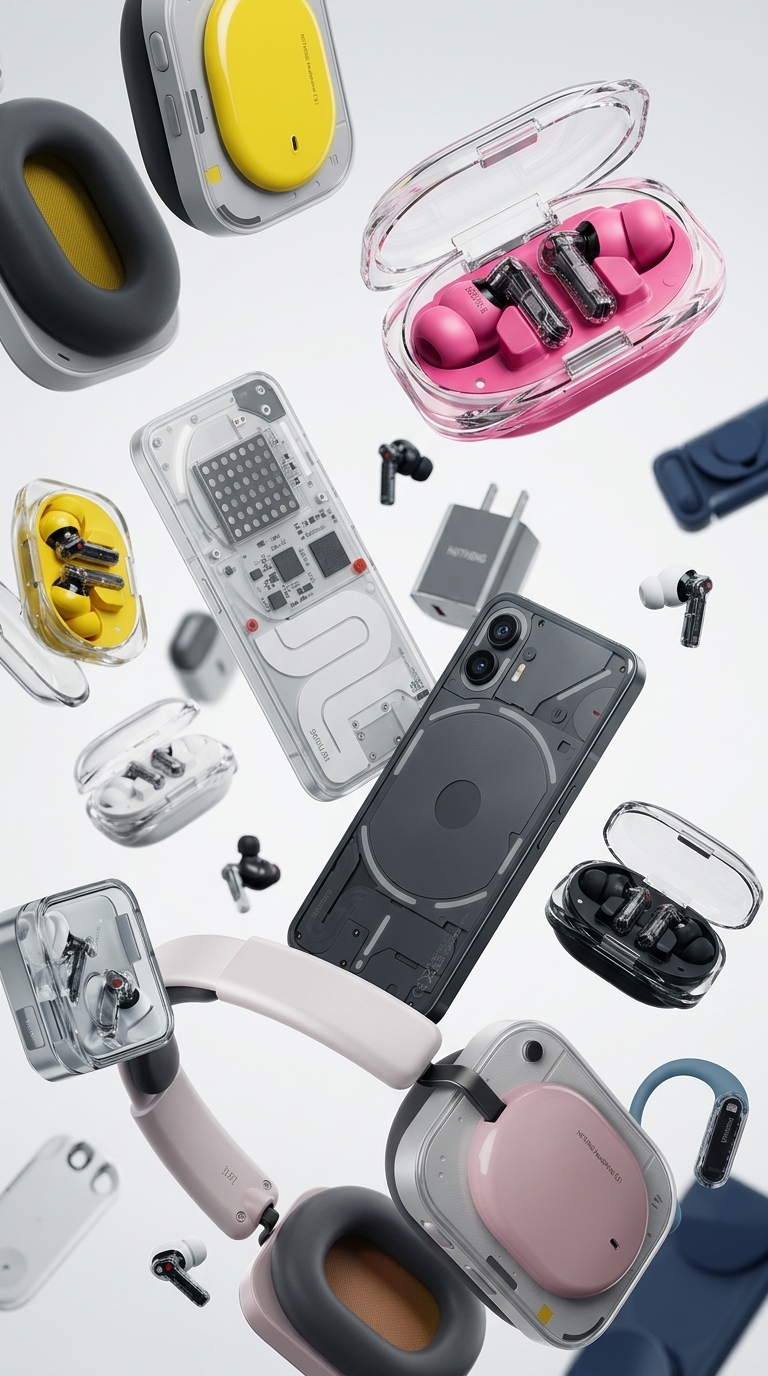
Nothing is not starting from zero. Pei says tens of millions of its devices are already in people's "pockets and ears." On the software side it has an early version of the idea in the Essential Key on its Phone 3a series, a button that sends screenshots, voice notes and photos to an app called Essential Space, which can turn saved items into task lists. The December device looks like that instinct moved into its own object.
The company has been telling this story for a while. When it raised $200 million at a $1.3 billion valuation in September 2025, Pei said Nothing would build an AI-native platform where hardware and software converge. He also said the phone would stay the mass-market default for years, but that daily carry would include "an additional device that will be just as important." December is when we find out what that additional device is.
Lights and shadows
None of this guarantees a good product. The first wave of AI gadgets, the pins and pocket assistants, mostly stumbled, and the most closely watched attempt of all, the device OpenAI is developing with Jony Ive, has slipped. According to court filings reported in February, it will not ship before the end of February 2027.
Nothing's approach has real advantages. It is modest about its claims and honest about its audience. But it also leaves open questions that the announcement does not answer. If the device has no display, how does the user see what it has captured? Nothing has not said whether it depends on a paired phone. And a device built to gather context is a device that listens, which will make privacy the first question anyone asks, and one the company will need to answer plainly.
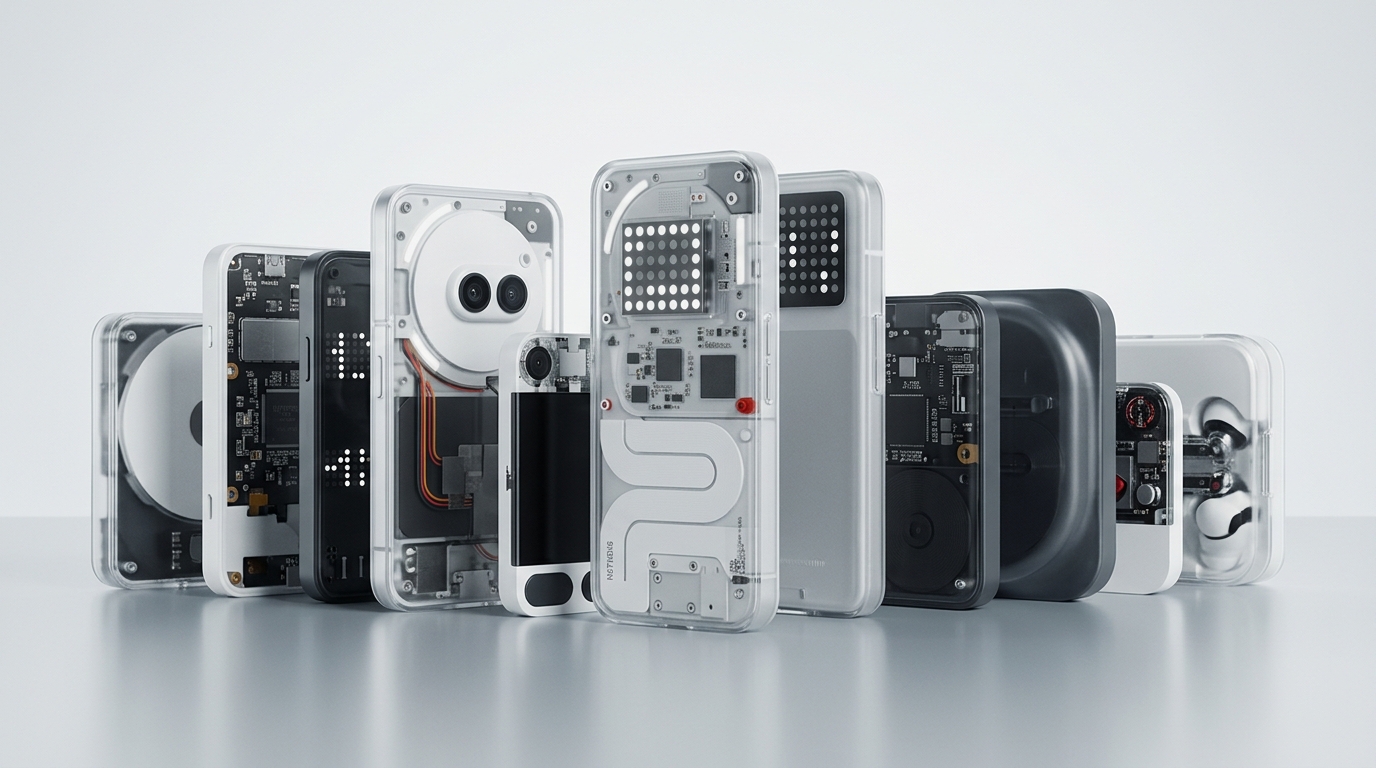
There is a small irony in the teaser. Nothing built its identity on transparency, with clear casings and visible components, as if the honest thing to do with technology was to show how it works. Its first AI-native product arrives as a matte, dark, closed shape.
That may be the point. A device that disappears into a working day is the opposite of a gadget that wants to be looked at. Whether Pei is right that the future of AI is quieter, narrower, and more useful than its marketing suggests, we will know soon enough. For now, the most interesting thing about the product is the claim it carries: that the next important piece of hardware is one you will barely notice, doing something that matters.