GTA VI Launched With a Selfridges Store and a Nike Collab
Vice City's wardrobe has left the screen.
Y/Magazine
Editorial
Business
The Swoosh is back after 24 years.
Photos: Nike - Official Press
Nike becomes Formula 1's official apparel and uniform supplier from 2027, replacing Puma, and partners with F1 Academy. What the deal covers, what remains unknown, and why both sides need it.
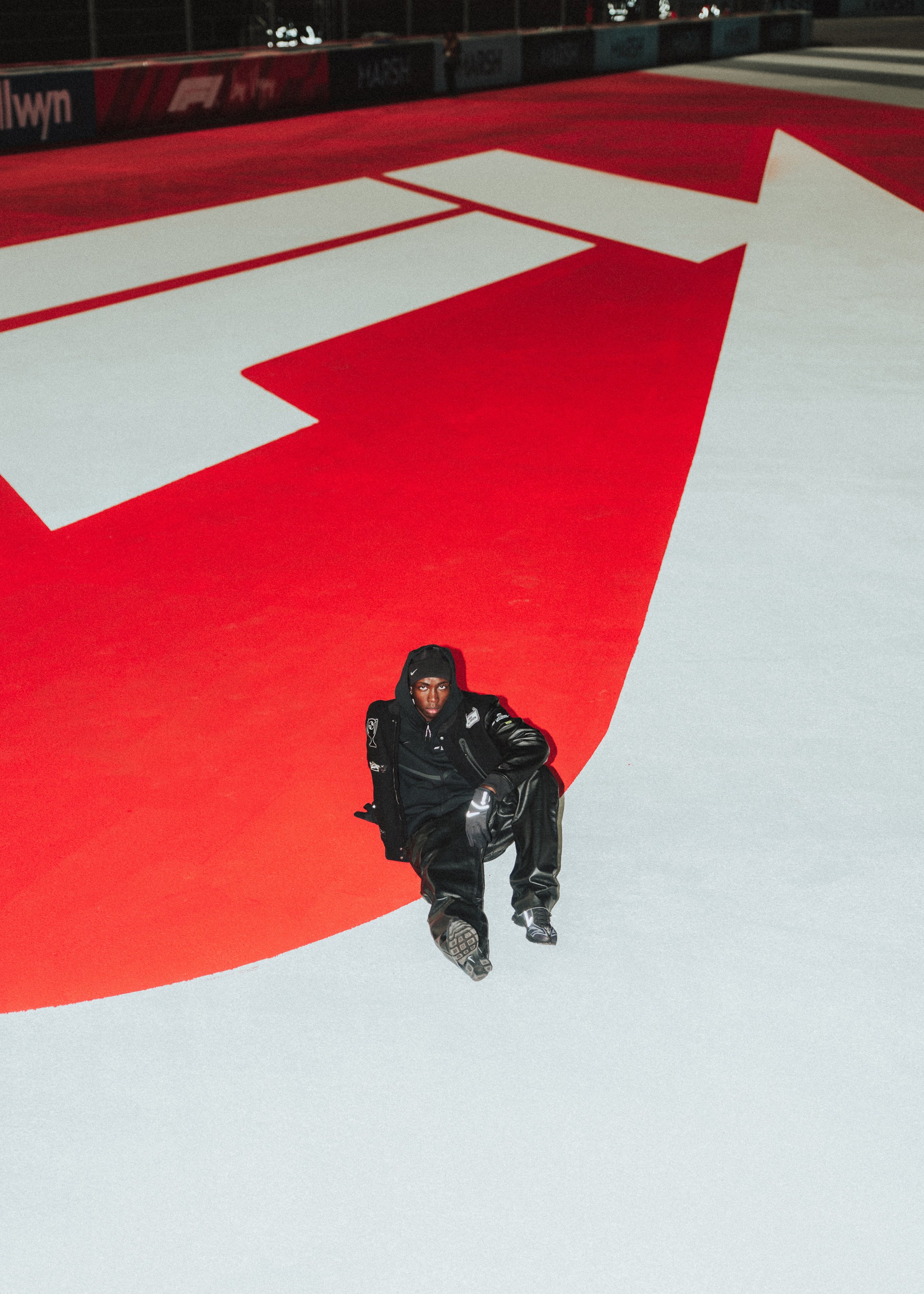
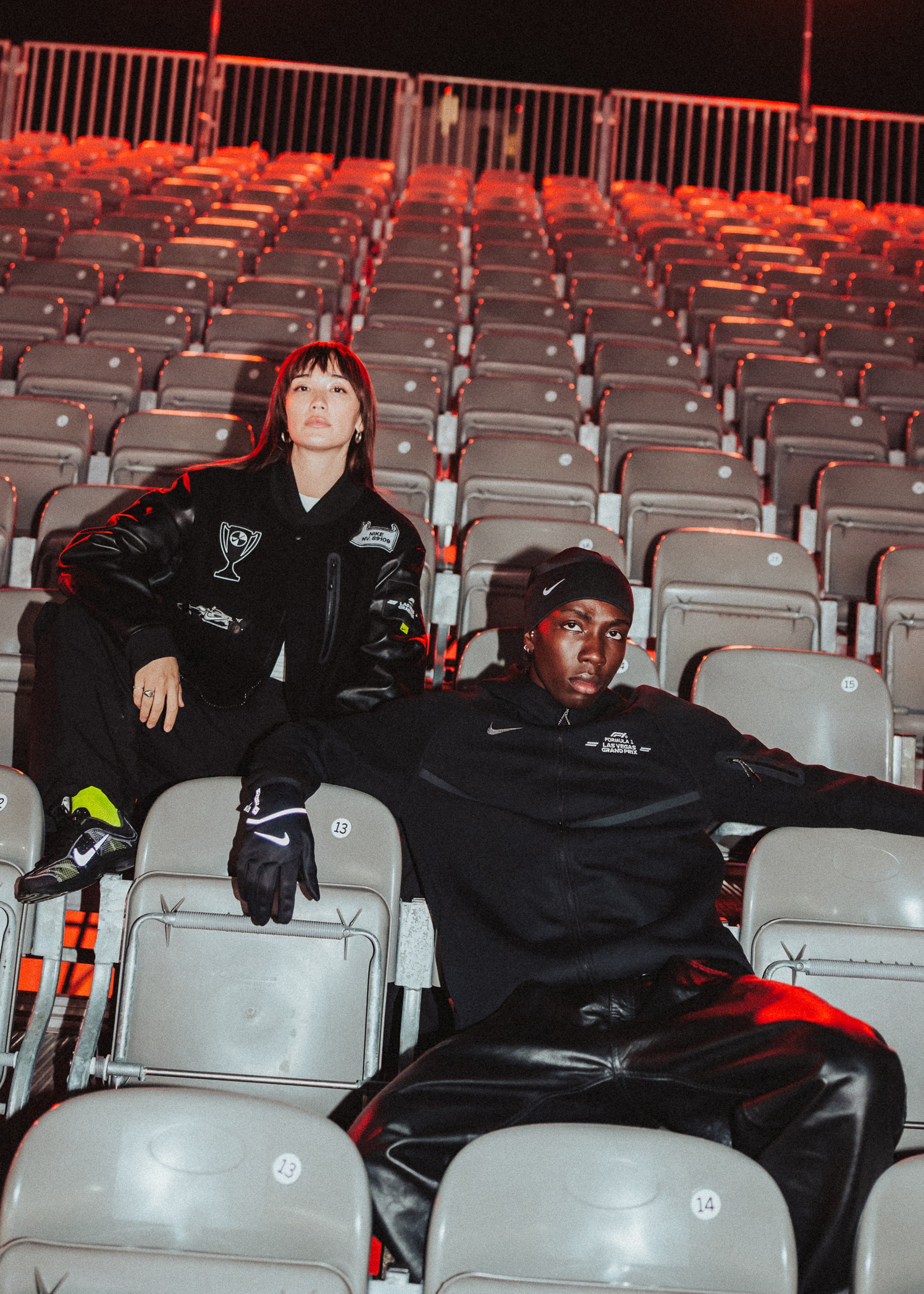
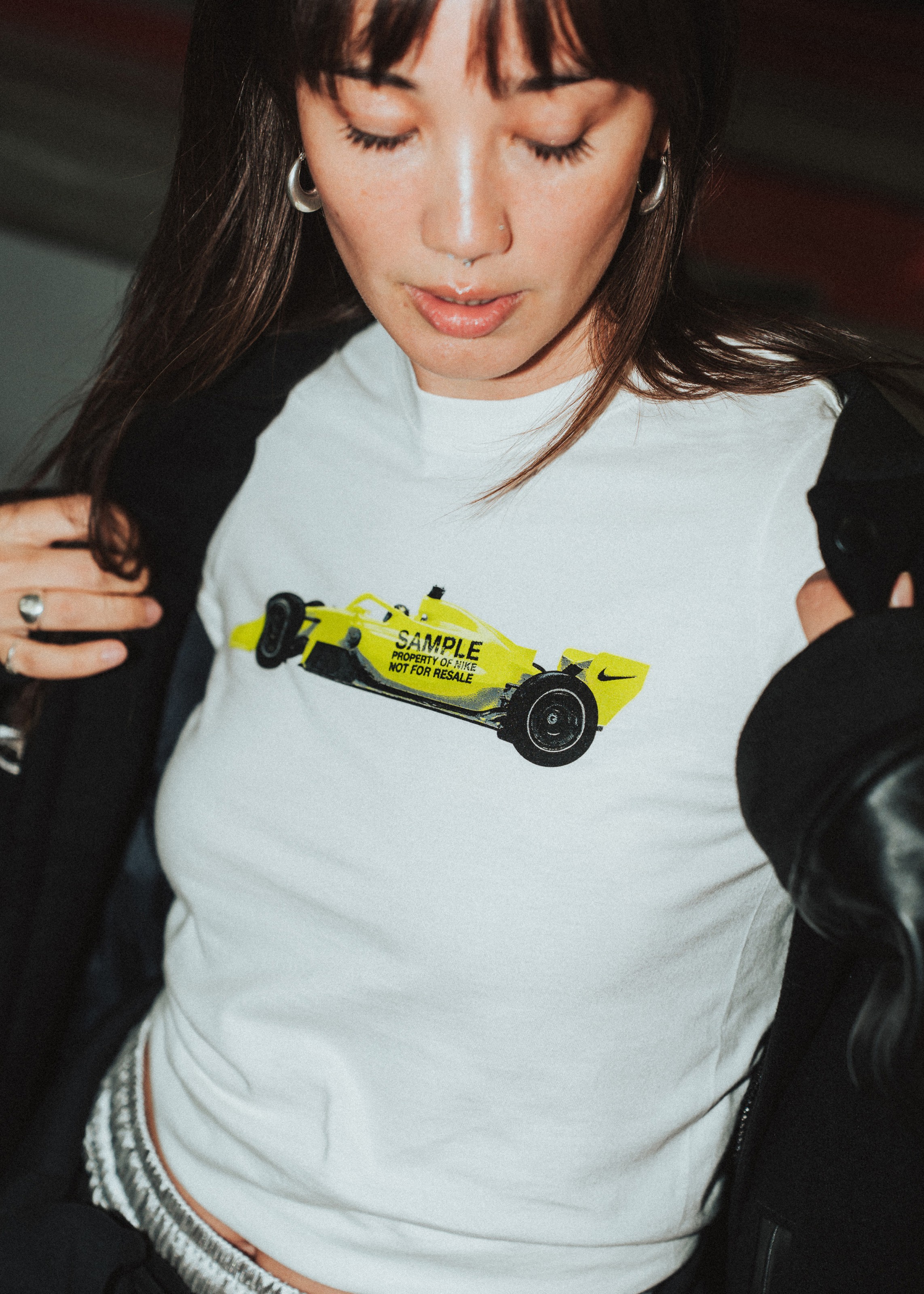
On Friday 20 November, in Las Vegas, the first F1 x Nike collection debuted at two addresses: the Nike store at Caesars Palace and the F1 Hub inside The Venetian. The sneakers and apparel were the visible part of a larger announcement. After a long absence from the sport, Nike is back in Formula 1, and this time it is not backing one driver. It is dressing the sport itself.
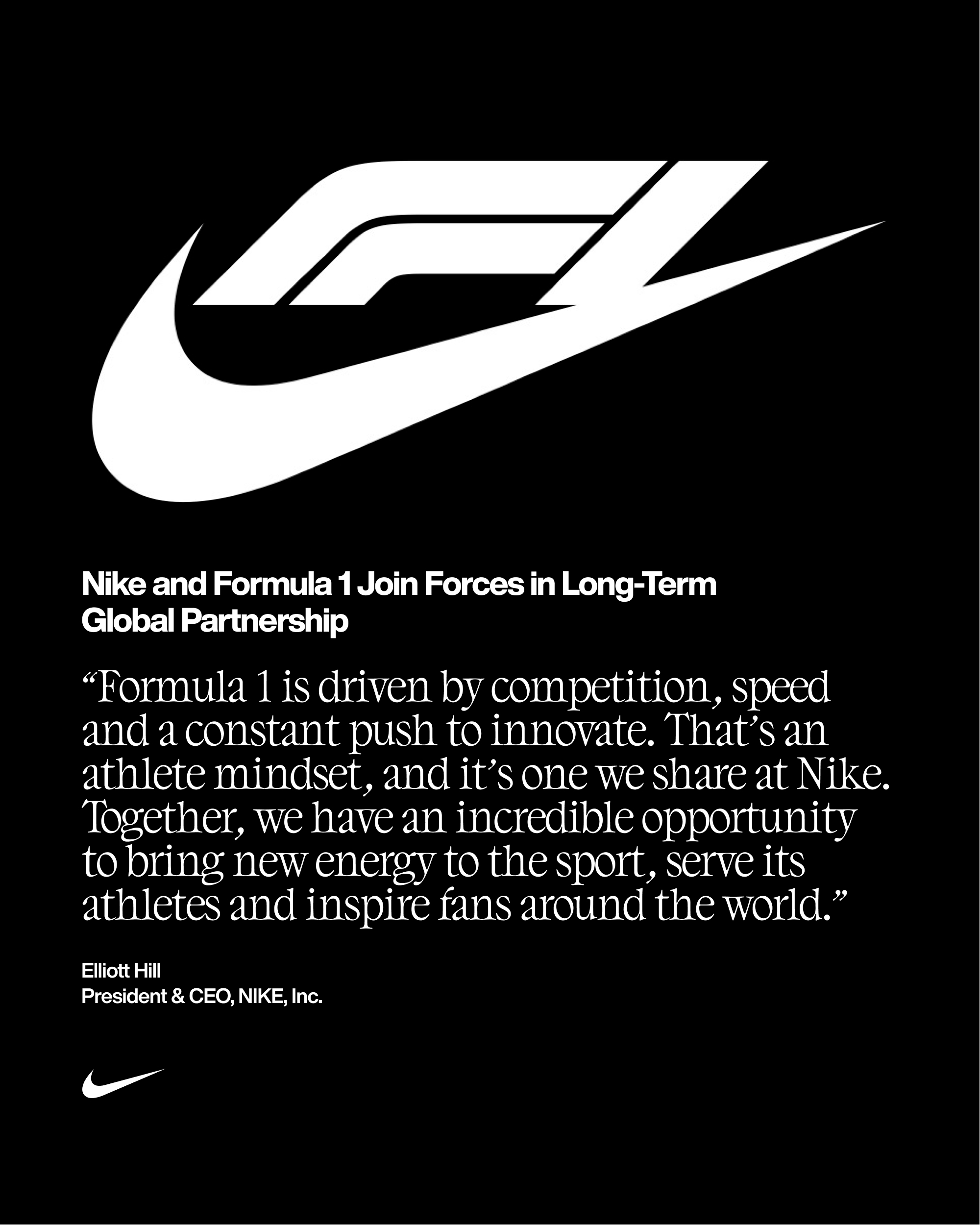
Formula 1 and Nike announced a "long-term partnership" starting with the 2027 season. Neither side has said how long it runs, and the financial terms have not been disclosed. Nike becomes an Official Partner of F1 and its official apparel and uniform supplier, Nike's release does not mention Puma, but trade reports say Nike replaces it, after a run in that role that reportedly began in 2023.
In practice that means two things. First, Nike will be the uniform provider for F1 staff at events worldwide, and the release does not say which roles are covered. Second, the partners plan sportswear collections in footwear, apparel and accessories, with limited capsule collections beginning in 2027 and new race-weekend experiences still to be detailed. Nike also becomes Official Sporting Apparel Partner of F1 Academy, the all-female junior series, where young athletes will give input that shapes the technology, design and style of future performance gear.
The deal does not put Nike on the cars. Puma still supplies race kit and teamwear for Ferrari, Aston Martin and McLaren, and adidas works with Mercedes and the Audi works team. One report expects Red Bull to join adidas before 2027, but that is not confirmed. A Jefferies analyst also said Nike's contract excludes exclusive trackside merchandising rights, so Nike will focus on flagship stores, digital channels and designated F1 retail hubs.
For Formula 1, the interest is in what the deal adds to a commercial strategy that has been taking shape for several years. Stefano Domenicali, the sport's president and chief executive, says F1 is "experiencing unprecedented global growth, reaching hundreds of millions of fans." He calls the agreement "far more than a commercial partnership; it is the coming together of two brands that shape culture." Reuters described the Nike agreement as part of F1's push to build a wider lifestyle business.
The pattern is easy to see. In October 2024, F1 announced a 10-year partnership with LVMH, covering Louis Vuitton, Moët Hennessy and TAG Heuer from 2025. The terms were not disclosed, though the Daily Mail reported a value above $1 billion. Add Nike, and F1 now has a luxury partner and a sportswear partner of the highest rank, each with its own audience. The sport is behaving less like a competition with sponsors and more like a brand with a portfolio. A Jefferies analyst said the deal supports sponsorship revenue growth for Liberty Media, F1's owner, and likely represents an "upsized" commitment compared with previous arrangements.
For Nike, the logic is different, and more pressing. The company is in the middle of what one analyst called a "complex global turnaround." In its most recent quarter, Converse and China both posted double-digit declines, and analysts have been blunt: "The top line is worsening, not improving," said one. In September, Nike added Alexandre Arnault of LVMH's Moët Hennessy to its board, with the company saying he understands how influential brands stay relevant.
F1 offers something Nike's own marketing cannot easily buy: a sport that has become fashionable among younger and more international audiences, and a calendar of global events. Nike also has history to draw on. From 1996 to 2002 it worked with Michael Schumacher, making his custom racing boots and the Air Zoom Schu trainer that collectors still seek. At this year's Miami Grand Prix, it made two one-off pairs of shoes for the Cadillac team.
The risk is that the sport is crowded. Adidas arrived with Mercedes two years ago, and Puma remains deeply embedded in the teams. Being the official supplier to the paddock is a visible but narrower position than owning the cars.
Several important points have not been answered. Neither company has said what the deal is worth or how long it lasts. Nobody has named the drivers or teams Nike will work with, or said how Puma's existing arrangements will wind down. The Las Vegas collection is limited, and the announcement promises more releases through 2027 and beyond without dates.
That makes the first season the real test. The first collections will show whether Nike is making a fashion statement or a performance one, and whether F1 fans want to wear the sport in the way football and basketball fans do. After 24 years away, the Swoosh has returned to the grid. Domenicali says the two are "only at the start of what we can achieve together." What they achieve is the story still to be told.

Your cart is empty